


IGN (In-Game Name):
[Main] Zrle
[Applying] Xrla
[Alt] Zr1e
Discord Name & Tag: zerlaa
Which timezone are you in? EST
List your current and past IC/OOC faction applications:
Shopkeeper - Denied
Art Teacher - Accepted
Shrine Maiden - Denied
+ denied model app, I don't have link
Describe your activity on the server:
On my main account, I am online every day. The duration varies day to day but roughly falls between a low of 2 hours and upwards of 14 hours. I first joined the server back in 2020, and have held four roles since. I joined High School Swim, High School Dodgeball (during its minuscule existence several years ago), and then High School Volleyball in 2022. I took a break from SRP and came back in 2023 and re-joined the same volleyball team, which I have been on since. This is what takes up most of my time on the server, as I am very committed to the role and have been co-captain since the start of 2024. For a short duration, I joined teacher faction, but the role was not the best fit for me, so I left shortly after.
Overall, my main account (which I started using in 2022) holds over 25 weeks of playtime. My alt (and the one I'm applying with) only has 1 week and 5 days of playtime.
What is your motivation for applying?:
I knew that I was going to apply for KPD around four months ago, when the last KPD wave occurred. Before that, I had always been intrigued by the role, but I felt that it was unattainable, and anxiety had stopped me from pursuing it further. However, a majority of my friend group being in the faction has motivated me to apply, even if it is a step out of my comfort zone. In addition, I want to branch out into other factions. I have been part of sports faction for five-ish years at this point, experimenting with multiple teams; however, I have only ever held one role outside of this, which was a teacher for only a couple of months. The role didn't fit me very well, and after hearing more about what KPD officers do, I know the role would suit me more than others I could apply for. All this has led me to where I am now, writing this application in hopes of pursuing the faction.
What knowledge do you have of Police Work?
The majority of my knowledge lies in general knowledge, research, and select aspects of KPD work that I have heard of through word of mouth. In addition, I do know that combat roleplay is vital to police work; so while I do not have a background involved in crime, I have educated myself on combat roleplay in order to have a good understanding beforehand. In addition, while I have not listed it, I am aware that there are codes to indicate different emergencies quickly and effectively without giving away information.
Positions
To start with, there are the divisions: main and detective division. In terms of duties, they are similar, yet detectives can do patrols alone and hold interrogations/investigations. The only position that is above both divisions is the Commissioner, who is the faction leader.
Main Division
Detective
Cadet is the only role I will go into specifically, and that is because they are the "in-training" role. This is the role one assumes upon acceptance into KPD, and will go through a 2 week training period before taking an exam to become a PO. During this time, they are assigned trainers, and will go through training in a variety of ways, including demonstration and actually performing duties with higher ranking officers.
To start with, there are the divisions: main and detective division. In terms of duties, they are similar, yet detectives can do patrols alone and hold interrogations/investigations. The only position that is above both divisions is the Commissioner, who is the faction leader.
- [HU] Commissioner
Main Division
- [HU] Captain (CPT)
- [HU] Lieutenant (LT)
- Sergeant (SGT)
- Corporal (CPL)
- Patrol Officer (PO)
- Cadet
Detective
- [HU] Detective Superintendent (DSI)
- [HU] Detective Chief Inspector (DCI)
- Detective Inspector (DI)
- Detective Sergeant
- Detective Constable
Cadet is the only role I will go into specifically, and that is because they are the "in-training" role. This is the role one assumes upon acceptance into KPD, and will go through a 2 week training period before taking an exam to become a PO. During this time, they are assigned trainers, and will go through training in a variety of ways, including demonstration and actually performing duties with higher ranking officers.
Duties
The duties/activities count quota, each with differing amounts assigned per task. These contribute towards your activity within the faction, as well as the paycheck one receives at the end of the month.
To summarize the majority of duties, and display my understanding of the overarching role that KPD officers have in Karakura; I have made groupings of the tasks. This is purposefully not a listing of individual quota task names & description. (Even if certain bullets are)
There are more duties, however, this is the majority of what officers are expected to do.
The duties/activities count quota, each with differing amounts assigned per task. These contribute towards your activity within the faction, as well as the paycheck one receives at the end of the month.
To summarize the majority of duties, and display my understanding of the overarching role that KPD officers have in Karakura; I have made groupings of the tasks. This is purposefully not a listing of individual quota task names & description. (Even if certain bullets are)
- Arrests - Criminals are arrested by officers, with the appropriate information logged and their mugshots recorded, and they are taken into custody. In addition, inmates are taken care of, and if applicable, visitation or transportation to court rooms.
- Reception - Taking calls, reports, & assisting citizens at the desk, this is how officers get information about situations and crime.
- Interrogation - Alongside investigations, this is done by the detective division to understand more about a situation from criminals or witnesses.
- Raids - A planned expedition to a goal (usually searching for contraband in a set location).
- City Oversight - Patrols, & watching CCTV allows officers to watch the city and get an idea of any situations going on, without them being reported.
- National Safety - When events occur, KPD is called over to the scene to assist in managing it and taking care of citizens' safety.
There are more duties, however, this is the majority of what officers are expected to do.
Equipment
Physical Items
All items are used to carry out respective duties, with certain items being based on rank.
Physical Items
- Tranquilizer (SGT/DI+) - Used to subdue citizens or animals within a larger radius with darts.
- Crowbar (PO+) - Used for a variety of reasons, mainly within raids to get into locked areas and containers.
- Stun Blaster - [Blue or yellow] Used to stun citizens within an 8 block radius (not around water).
- Baton - Used in close combat situations within a 2 block radius, recommended to defend, attack, or subdue citizens in tight areas.
- Handcuffs - Used to detain, or arrest criminals. The handcuffs are made of steel, and designed to fit all persons.
- Pepper Spray - Used to subdue mainly animals, and occasionally criminals assaulting others as a deterrent. Causes irritation to skin and eyes.
- Riot Shield - Used as a defensive tool. In main hand, no offensive tools can be used, in off hand, offensive tools may be used however the shield cannot be used as protection.
- Rubber Boots - Used during excursions to places with running electrical current. The rubber boots are used to deflect the shocks of train rails, and other currents.
- Gas Mask - Used for defense of biochemical substances, in both criminal and national emergency situations. This can be mugged without need for KO.
- Police Badge - Item verifying police identity with full name, rank and callsign.
- Police Radio - Item used for receiving police and other emergency communications. It is waterproof, and cannot be mugged, however can be destroyed with proper tools.
- Body Camera - Item used to capture CCTV from officer’s perspective. This cannot be mugged, however can be destroyed.
- Luminol Spray - Used to detect blood on weapons and sceneries unless the subject was properly cleaned (hydrogen peroxide or bleach and water).
- Disposable Gloves - Used in cases where sterilization or fingerprint proofing is necessary.
- First Aid Kit - Small kit with basic emergency needs to temporarily aide a citizen for an additional 5 minute timer until emergency medical services are available.
- Police Cruiser (SGT/DI+)
- Police Bike (CPL+)
All items are used to carry out respective duties, with certain items being based on rank.
While my current knowledge might be lacking in areas, I am more than eager to learn in order to complete my knowledge and be a well-rounded officer if accepted.
Why is Police important to SchoolRP?
To me, police are possibly one of the most important positions within SchoolRP. While the faction inherently is not included under the basis of “school setting” - having police creates a realistic environment for further roleplay. Unlike a utopia, the expectation for a society is not to have everyone perfect, rather a natural element of evil and chaos without it becoming excessive. Police keep citizens in line under fear of punishment, as well as stop any crime that does go on. In addition, police allows for more of a broad spectrum within character development; criminals and gangs falling under the evil perspective, police falling under the lawful perspective (majority of the time). Even if crime is disregarded, there are also national emergencies/disaster events which are spontaneous and uncontrollable both in real life and emulated in SRP. Police become a frontliner and first responder to keep citizens as safe as possible. Overall, the role is vital to the structure of SRP in both creating a fun and realistic environment for all groups of players.
Do you acknowledge that if training is held whilst you are online, you are needed to attend or you will be punished?
Yes I completely understand!
In-Character (IC) Section
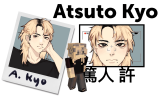
Atsuto Kyo walked through the entrance of the interview hall. Before any notice, Kyo sat down without too much flashy movement; the motion hinted at irony, given his flamboyant physical appearance. He cleared his throat and interlocked his hands in his lap.
What's your character's full name?:
“Atsuto Kyo. Please address me by my last name, Kyo. It's a respect thing, you respect me, and I will respect you.”
How old is your character (if accepted)?:
“I turned thirty-eight last spring.”
What are your character's gender and pronouns?:
“I am a male, thus go by he-him pronouns. . Thank you for asking.”
Please select your highest academic role at the time of writing this application:
(Grade-12/Bachelors/Masters/PhD):
“I got a college bachelors degree for criminal justice in Tokyo. I returned to Karakura hoping to get my masters. . but I never got around to it.”
What languages does your character know besides Japanese?:
“Unfortunately at this time, I only speak Japanese. Other languages were never really my forte.”
Describe your character; how they look, what makes them unique?
Flashy could be the best way to describe the male physically. He stood at the height of 6'3, making him an outstanding height, yet in the small town of Karakura, his height became nothing irregular. His descent obviously lay within his Japanese heritage, with no addition of other ethnicities. Instead, the blonde hair that he adorned was clearly bleached, roots bearing his natural black tone. Rather than keeping his hair short, he had it drawn behind him in a bun. If you were to take a closer look at his expression, the faint notice of make-up was evident, the only obvious was the colored eyeliner that rested in his waterline.
One might expect him to bear a smile, or at least a happy expression, as his appearance was akin to that of a model. Yet a lack of smile lines in his late-thirties age declared his colder demeanor. While he couldn't be deemed “thug” like, his ears adorned a small piercing, and his arm held a tattooed sleeve of flowers: perhaps the decoration was a token of rebellion in the eyes of Japanese culture.
How does your character act in a professional/casual situation?
In terms of professionalism, Kyo could only be described as the definition of the word. Unlike his name, meaning “kindness,” nor his appearance that consolidates flamboyancy, he operates in a cold manner. Separating his co-workers from his friends, even with the fact that he refuses to acknowledge his first name or nicknames. While he enjoys his work, it's few and far between when a smile plays on his expression. With a conflicting attitude of a classic go-getter, he's quick to get his work done and is ambitious to do a good job. He respects those who are higher than him, but doesn't tolerate disrespect, no matter the giver.
As if he doesn't know the meaning of “casual,” Kyo often is closed off. Even off the clock, he never stops truly working. The most notable difference is that when he is at home, he maybe smiles thirty percent more, entirely virtually unnoticeable. He pursues his hobbies as if they were also a part of his job, engaging in Kyudo and Kendo to train his physical strength.
What is their outlook on the idea of co-workers & teamwork?
Atsuto Kyo is amicable, and polite when it comes to working with others, however he values respect over all else. He is communicative and doesn't hold back when it comes to working at his best with his utmost commitment. He believes that if everyone in a group focuses on the outcome rather than the process, it will lead to better success. This belief shines especially in the police force, where one mistake leads to significant consequences for other lives. Though, if he finds a co-worker to be especially uncooperative or disrespectful, he tends to shut down slightly and will not engage with them beyond necessary. Of course this is not to say he will entirely hate them, but until they show proper regard towards Kyo, he will make no effort either.
What's your character's backstory?
To truly understand where Atsuto grew from, the story begins 123 years prior, in the ancestry of Kyo.
“Your grandfather is a hero”
1902 - 1933
“Allow, permit, forgive.” The understanding of the name “Kyo” holds different definitions, yet strangely, towards the family, all meanings tend to define them. Tracing back to their origins, the family has roots in the Kantō region. While the present majority of the family was based in Tokyo, older generations could be found in Kanagawa prefecture. An era marked by a devastating storm of events, the family persevered with the will to live.
On a fall evening, at approximately 19:07, August 23rd, 1902, in the port city of Yokohama, a young boy had his first cry. As if by fate, the night bore a sky of deep darkness, sprinkled with stars that glittered. Thus, the name Kyo Haru, as translated into “clear weather,” came into the world. Born to a wealthy family that had held its hereditary title for old Samarais, it had since lost all real luster. Yet, like all young boys from both old and new, the word was an inspiration even if, at the time, the modernity of the family was nothing but a fable in comparison. Following his early childhood, his parents remained strict, yet he was showered with all the love and dreams he could hope for. At his will, he was enrolled in martial arts training. While he could not be described as a prodigy by any means, he possessed remarkable tenacity that commanded respect from his peers. In this, he grew into a well-strengthened teenager.
As if the world had its eyes on Japan, the very first port city drew in thousands of people, both for its economic benefits and its wonder. As such, he met a Japanese woman named Yuki in a true cliché fashion; the girl captured his heart. Her family, who had come into the city to establish trade, had not been quite as rich. In comparison to the wealthier family, his parents were not quick to approve. Yet Haru was not one to listen, and by the time he had turned nineteen, he had managed to marry the woman. At the same time, his dreams of pursuing martial arts flourished. He had found himself recruited into the police force. Being a strong figure and having a goal-oriented ambition, the young Kyo rose quickly in the rankings. Like any other, the ambition Haru held was not to become some national hero extraordinaire. He did not wish to have his name recorded, although he would not be opposed to such a statement either. However, he sought a wealthy life and to rise in the rankings, more so than he had already accomplished.
Yet, at a rough one month past the day Haru turned twenty-one, disaster struck. If you were to ask Haru what that day entailed, he could only describe it as a monstrosity that he didn’t know how he survived. As the walls of every structure began to rumble, buildings toppled one after another. In one of Japan’s worst national historic events, the ground had shattered and brought on what would later be deemed the “Great Kantō Earthquake”. This national disaster brought about countless deaths and missing persons. While lucky to be alive, Haru was not immune to the disaster's impact. As a police officer, he had all hands on deck to help aid in the disaster. From morning till dusk in the wake, he was in the city with countless others, overturning the rubble to find any living persons.. In the end, Haru never ended up making contributions that earned him a place in any books, yet he saved as many people as he could during the disaster. Years passed after the incident, and Yuki gave birth to a son, Kyo Miura. For once, life seemed to turn upside down as the people began to rebuild.
“Not like your father”
1940 - 2000
Kyo Miura, born in the aftermath of a disaster; the wake of it was engraved in his soul. His father, who had previously been a police officer and aided on the frontlines of national disasters, retired and personally sought education in martial arts and emergency procedures. As if the trauma of what had happened in Haru's sight, Miura was made aware of the scene in Yokohama that day, despite his birth being seventeen years post. In comparison to his father, Miura's life was at best lackluster. His early life flew by under his father’s pressure. As a consequence, he found himself in the seat of a police officer. Kaori Ichiro, a young woman who worked alongside Miura, drew close during their work, which ultimately brought her to the “protagonist” of this backstory. Atsuto. Born in 1987 on a spring night, his parents, who were stern and cold, wished for him to be different. “Kindness,” they called out as they explained his name to anyone. Unlike the previous generations, the child was born in Tokyo. To start anew and take the chance of promotion, Miura had moved there shortly after becoming a police officer.
Atsuto Kyo: 0 - 12
One cannot pretend their history doesn’t exist. . . This was also the case with Atsuto; being called “nice” did not suddenly erase the fact that his parents could not provide the warmth of a traditional home. Adversely, his parents were studious with his education from the moment he started walkin’ and talkin’. They did not preach martial arts like Haru had with Miura, but instead, they let the young child “pick” his hobbies. The term pick becomes loose as though Atsuto was the first to make the choice, he was not permitted to quit, or give up on any aspiration. Thus, commitment was a trait thrust on him unwillingly. When he chose to practice Kyudo and Kendo, traditional Japanese archery and swordfighting, he became well-versed in martial arts.
The days he spent, turning from a quiet yet arguably violent toddler (akin to literally every other toddler) to a tranquil and veiled child, happened outside of his home. Never a quiet moment, he relished the moments he spent in school, where, although the teacher spoke, he could watch the trees reflecting passing seasons in peaceful solitude. Though these moments were quickly traded when the bell tolled, as he had an air of popularity that was despised, yet in his growing respectful nature, he didn’t bother to address them. Then, after the class, he was sent to an endless stream of activities.
The freedom of choice that Atsuto believed he had was stripped from him during an argument once he had turned ten. It was like every other day: a studious class day, followed by a cram school, then Kendo class, and finally, he could rest at home. . . Per usual in a relatively warm household, his mother, Kaori Kyo, inquired about his day and school life, which was met with the young boy ranting over his supposed friends trying to take photos of him with their new flip phones. As if the idea delighted Kaori, she spoke with great indulgence.
“What a lovely idea! You should start modelling. Get yourself known in this world now.”
To Atsuto, this revelation that his mother spoke of was the end of the world instead. The idea of being in the limelight was repulsive at best, and as he talked of protest, his father became an authoritative hound. There was no recollection of the words that traded, but Miura took his resistance as traitorous, something that needed to be disciplined. . . In the end, Atsuto could never forget the feeling of the strengthened police officer’s–his father’s iron hand against his skin. If he felt that there was trust within the household, the semblance of it was destroyed in the matter of a singular night. Truthful feelings, he learnt, were made for him and him alone. So, he presented in front of the camera with a fixed disposition, even if he didn’t express displeasure, he never acted like he was having a grand time.
“What it means to be unique”
2000 - 2010
Atsuto Kyo: 13 - 23
“Jack of all trades, master of none, though oftentimes better than master of one.” The expression could not have suited young Atsuto more. He possessed capabilities above his peers, being well-rounded in his scholarship, someone who could not be pushed around due to his athleticism, and the popularity that rose with his unexpected modeling position. If anything, the kid still wished to be average. Yet, he was told that being unique was good, that standing out could only ever help him in life, that being recognized was a token he should not take for granted, as it would later help him achieve his goals. In a way, he understood that his tenacity and dedication, which were hard-earned from year after year of long, exhausting days, were only helpful. After all, when there was a test he needed to study for, he could get good grades without too much change to his schedule. All he needed to do was study for a bit after extracurricular activities, and he could pass the test with a good enough score to please his parents.
As he slowly made his way through the years, the societal expectation of knowing what he would do for the rest of his life gradually burdened his shoulders. Atsuto knew that his mother wished for him to continue and be a star, someone in the spotlight, which still never appealed to him in the slightest. So instead, he proposed a temporary idea that would please his father; he would follow the steps they had made and become a police officer. Though it didn’t exactly please his parents, they couldn’t refute the statement, being police themselves. Instead, Kaori just pushed him to do modelling non-verbally. More gigs. More photoshoots. More advertisements. In the natural mundane routine, Kyo had grown accustomed to getting dolled up in makeup, finding the eyeliner he garnered occasionally, a rather cool token to add to his appearance. To his mother's pleasure, outside of classes, he continued to put on a slight amount of makeup.
Atsuto could not remain the same forever, and as he aged, his personality shifted slightly to become more accepting and open, no longer entirely appalled by the idea of standing out. However, a core belief began to take hold, where, despite his easy-going nature, disrespect could never be entirely dispelled from his life. The attitude of others profoundly affected his character when they did not respect him or his choices. If his parents held him to the standard of being respectful to others, why did said others not have to reciprocate? The moral high ground became something of an enigma, as it only applied to him and him alone, due to his parents' attitude. Thus, a slight rebellion began to fester, and the day he turned eighteen, it set in motion.
The day drew like all others, except that instead of attending class, he found himself at a tattoo parlor. So actually, it was nothing like any other day. A few hours later, he was back at home. . and when his parents returned after working hours, their reactions differed wildly from each other. Neither was particularly enthusiastic about his rebellion, but his mother did not reproach it too harshly, saying that it did boost his individuality. His father was a different scenario, and before there could be any sort of explanation, a hand attempted to strike him. As an adult who was just as trained as the older generation, the blow never landed. In follow-up, he became distant with his parents and moved to his own place to begin his university days.
“Sticking to a plan”
2010 - 2025
Atsuto Kyo: 23 - 38
The years passed at the university with no trouble. He attended the University of Tokyo, how stereotypical. Yet, the program they sponsored in criminology fostered a well-rounded education. In his nature, being raised to be dedicated, the fact that he said he was going to become a police officer meant that he would follow through, no matter what. He stopped modelling and ignored most of his peers. This is not to say he had no friends, but rather, he kept a few close friends nearby who treated him with the respect he felt he deserved; otherwise, all others became an ignored background noise. He studied passionately, graduating with good grades.
He didn’t exactly struggle to find a job, quickly establishing himself in the Tokyo police department. Kyo rose in positions until he became a Corporal, where his placement plateaued. And he lived his years until nearly his 40s, fighting crime and doing standard police work. Yet, to the man now, the city's bustle became overwhelming. . after all, he never cared for attention in the first place. This prompted a “midlife crisis,” where he abandoned his life and friends, and moved to the outskirts of Karakura to lead a simple life of police work, promptly applying to the Karakura Police Department.
“Your grandfather is a hero”
1902 - 1933
“Allow, permit, forgive.” The understanding of the name “Kyo” holds different definitions, yet strangely, towards the family, all meanings tend to define them. Tracing back to their origins, the family has roots in the Kantō region. While the present majority of the family was based in Tokyo, older generations could be found in Kanagawa prefecture. An era marked by a devastating storm of events, the family persevered with the will to live.
On a fall evening, at approximately 19:07, August 23rd, 1902, in the port city of Yokohama, a young boy had his first cry. As if by fate, the night bore a sky of deep darkness, sprinkled with stars that glittered. Thus, the name Kyo Haru, as translated into “clear weather,” came into the world. Born to a wealthy family that had held its hereditary title for old Samarais, it had since lost all real luster. Yet, like all young boys from both old and new, the word was an inspiration even if, at the time, the modernity of the family was nothing but a fable in comparison. Following his early childhood, his parents remained strict, yet he was showered with all the love and dreams he could hope for. At his will, he was enrolled in martial arts training. While he could not be described as a prodigy by any means, he possessed remarkable tenacity that commanded respect from his peers. In this, he grew into a well-strengthened teenager.
As if the world had its eyes on Japan, the very first port city drew in thousands of people, both for its economic benefits and its wonder. As such, he met a Japanese woman named Yuki in a true cliché fashion; the girl captured his heart. Her family, who had come into the city to establish trade, had not been quite as rich. In comparison to the wealthier family, his parents were not quick to approve. Yet Haru was not one to listen, and by the time he had turned nineteen, he had managed to marry the woman. At the same time, his dreams of pursuing martial arts flourished. He had found himself recruited into the police force. Being a strong figure and having a goal-oriented ambition, the young Kyo rose quickly in the rankings. Like any other, the ambition Haru held was not to become some national hero extraordinaire. He did not wish to have his name recorded, although he would not be opposed to such a statement either. However, he sought a wealthy life and to rise in the rankings, more so than he had already accomplished.
Yet, at a rough one month past the day Haru turned twenty-one, disaster struck. If you were to ask Haru what that day entailed, he could only describe it as a monstrosity that he didn’t know how he survived. As the walls of every structure began to rumble, buildings toppled one after another. In one of Japan’s worst national historic events, the ground had shattered and brought on what would later be deemed the “Great Kantō Earthquake”. This national disaster brought about countless deaths and missing persons. While lucky to be alive, Haru was not immune to the disaster's impact. As a police officer, he had all hands on deck to help aid in the disaster. From morning till dusk in the wake, he was in the city with countless others, overturning the rubble to find any living persons.. In the end, Haru never ended up making contributions that earned him a place in any books, yet he saved as many people as he could during the disaster. Years passed after the incident, and Yuki gave birth to a son, Kyo Miura. For once, life seemed to turn upside down as the people began to rebuild.
“Not like your father”
1940 - 2000
Kyo Miura, born in the aftermath of a disaster; the wake of it was engraved in his soul. His father, who had previously been a police officer and aided on the frontlines of national disasters, retired and personally sought education in martial arts and emergency procedures. As if the trauma of what had happened in Haru's sight, Miura was made aware of the scene in Yokohama that day, despite his birth being seventeen years post. In comparison to his father, Miura's life was at best lackluster. His early life flew by under his father’s pressure. As a consequence, he found himself in the seat of a police officer. Kaori Ichiro, a young woman who worked alongside Miura, drew close during their work, which ultimately brought her to the “protagonist” of this backstory. Atsuto. Born in 1987 on a spring night, his parents, who were stern and cold, wished for him to be different. “Kindness,” they called out as they explained his name to anyone. Unlike the previous generations, the child was born in Tokyo. To start anew and take the chance of promotion, Miura had moved there shortly after becoming a police officer.
Atsuto Kyo: 0 - 12
One cannot pretend their history doesn’t exist. . . This was also the case with Atsuto; being called “nice” did not suddenly erase the fact that his parents could not provide the warmth of a traditional home. Adversely, his parents were studious with his education from the moment he started walkin’ and talkin’. They did not preach martial arts like Haru had with Miura, but instead, they let the young child “pick” his hobbies. The term pick becomes loose as though Atsuto was the first to make the choice, he was not permitted to quit, or give up on any aspiration. Thus, commitment was a trait thrust on him unwillingly. When he chose to practice Kyudo and Kendo, traditional Japanese archery and swordfighting, he became well-versed in martial arts.
The days he spent, turning from a quiet yet arguably violent toddler (akin to literally every other toddler) to a tranquil and veiled child, happened outside of his home. Never a quiet moment, he relished the moments he spent in school, where, although the teacher spoke, he could watch the trees reflecting passing seasons in peaceful solitude. Though these moments were quickly traded when the bell tolled, as he had an air of popularity that was despised, yet in his growing respectful nature, he didn’t bother to address them. Then, after the class, he was sent to an endless stream of activities.
The freedom of choice that Atsuto believed he had was stripped from him during an argument once he had turned ten. It was like every other day: a studious class day, followed by a cram school, then Kendo class, and finally, he could rest at home. . . Per usual in a relatively warm household, his mother, Kaori Kyo, inquired about his day and school life, which was met with the young boy ranting over his supposed friends trying to take photos of him with their new flip phones. As if the idea delighted Kaori, she spoke with great indulgence.
“What a lovely idea! You should start modelling. Get yourself known in this world now.”
To Atsuto, this revelation that his mother spoke of was the end of the world instead. The idea of being in the limelight was repulsive at best, and as he talked of protest, his father became an authoritative hound. There was no recollection of the words that traded, but Miura took his resistance as traitorous, something that needed to be disciplined. . . In the end, Atsuto could never forget the feeling of the strengthened police officer’s–his father’s iron hand against his skin. If he felt that there was trust within the household, the semblance of it was destroyed in the matter of a singular night. Truthful feelings, he learnt, were made for him and him alone. So, he presented in front of the camera with a fixed disposition, even if he didn’t express displeasure, he never acted like he was having a grand time.
“What it means to be unique”
2000 - 2010
Atsuto Kyo: 13 - 23
“Jack of all trades, master of none, though oftentimes better than master of one.” The expression could not have suited young Atsuto more. He possessed capabilities above his peers, being well-rounded in his scholarship, someone who could not be pushed around due to his athleticism, and the popularity that rose with his unexpected modeling position. If anything, the kid still wished to be average. Yet, he was told that being unique was good, that standing out could only ever help him in life, that being recognized was a token he should not take for granted, as it would later help him achieve his goals. In a way, he understood that his tenacity and dedication, which were hard-earned from year after year of long, exhausting days, were only helpful. After all, when there was a test he needed to study for, he could get good grades without too much change to his schedule. All he needed to do was study for a bit after extracurricular activities, and he could pass the test with a good enough score to please his parents.
As he slowly made his way through the years, the societal expectation of knowing what he would do for the rest of his life gradually burdened his shoulders. Atsuto knew that his mother wished for him to continue and be a star, someone in the spotlight, which still never appealed to him in the slightest. So instead, he proposed a temporary idea that would please his father; he would follow the steps they had made and become a police officer. Though it didn’t exactly please his parents, they couldn’t refute the statement, being police themselves. Instead, Kaori just pushed him to do modelling non-verbally. More gigs. More photoshoots. More advertisements. In the natural mundane routine, Kyo had grown accustomed to getting dolled up in makeup, finding the eyeliner he garnered occasionally, a rather cool token to add to his appearance. To his mother's pleasure, outside of classes, he continued to put on a slight amount of makeup.
Atsuto could not remain the same forever, and as he aged, his personality shifted slightly to become more accepting and open, no longer entirely appalled by the idea of standing out. However, a core belief began to take hold, where, despite his easy-going nature, disrespect could never be entirely dispelled from his life. The attitude of others profoundly affected his character when they did not respect him or his choices. If his parents held him to the standard of being respectful to others, why did said others not have to reciprocate? The moral high ground became something of an enigma, as it only applied to him and him alone, due to his parents' attitude. Thus, a slight rebellion began to fester, and the day he turned eighteen, it set in motion.
The day drew like all others, except that instead of attending class, he found himself at a tattoo parlor. So actually, it was nothing like any other day. A few hours later, he was back at home. . and when his parents returned after working hours, their reactions differed wildly from each other. Neither was particularly enthusiastic about his rebellion, but his mother did not reproach it too harshly, saying that it did boost his individuality. His father was a different scenario, and before there could be any sort of explanation, a hand attempted to strike him. As an adult who was just as trained as the older generation, the blow never landed. In follow-up, he became distant with his parents and moved to his own place to begin his university days.
“Sticking to a plan”
2010 - 2025
Atsuto Kyo: 23 - 38
The years passed at the university with no trouble. He attended the University of Tokyo, how stereotypical. Yet, the program they sponsored in criminology fostered a well-rounded education. In his nature, being raised to be dedicated, the fact that he said he was going to become a police officer meant that he would follow through, no matter what. He stopped modelling and ignored most of his peers. This is not to say he had no friends, but rather, he kept a few close friends nearby who treated him with the respect he felt he deserved; otherwise, all others became an ignored background noise. He studied passionately, graduating with good grades.
He didn’t exactly struggle to find a job, quickly establishing himself in the Tokyo police department. Kyo rose in positions until he became a Corporal, where his placement plateaued. And he lived his years until nearly his 40s, fighting crime and doing standard police work. Yet, to the man now, the city's bustle became overwhelming. . after all, he never cared for attention in the first place. This prompted a “midlife crisis,” where he abandoned his life and friends, and moved to the outskirts of Karakura to lead a simple life of police work, promptly applying to the Karakura Police Department.
General knowledge
Can you legally own a pocket knife in Karakura?
“I don't believe so, no. I believe the bail is something like 150k for that. . .”
Name 5 medical items that do NOT require a prescription
- Crutches
- Paracetamol
- Multivitamins
- Melatonin
- Cough syrup
If you see your co-workers physically abusing an inmate, what should you do?
“I don't particularly like to get involved in others’ business, but abusing inmates is an abuse of power and a social injustice that will only fester if left alone. Even if they committed a crime, an inmate still deserves basic human respect. For the sake of the inmate, I would pull said co-worker aside and away from the inmate. I would try to reason with them. . . but I find it unlikely they would listen, or if they did, it would only be to save face. Besides, it's not my job to discipline or control my co-workers, so after the inmate is no longer in immediate danger, I would bring the fault up immediately to the highest commanding officer, their jurisdiction is what matters, so I would merely mention the details pertaining to the event, time, and place so it can be checked on CCTV. Then I would remove myself from the situation.”
What should you do if you see your co-worker being assaulted?
“Well, it depends on who is doing the assaulting. Let's say it is just a civilian, I would get between the fight and subdue the offender to the best of my ability. While trying to hurt them as little as possible, my main goal will be to restrain them for custody. Likely I would use my stun blaster, or move my baton between the two, really depends on the scene. All the while taking note of the situation, when, where, whom. . etcetera, so it can be recorded for later. I will also look for any cameras nearby, for more concrete evidence rather than eye witness testimony if I am not possessing a body camera at the time.”
“If it were a fellow co-worker, I would likely behave in a similar manner. The main goal is to diffuse the situation, but not subdue anyone. Get in between the two, use our words instead, because we’re all adults, co-workers no less, and shouldn't behave like toddlers. Lastly, if it were someone of higher command, I don't think I would put myself in between the fight. Not to say I would do nothing, but I would report it to anyone who is in charge of them. For any inner work situations, whether it was co-worker to co-worker fights, or superior officer to co-worker, they would be reported as promptly as possible.”
What do you do if you find out that your co-worker is corrupt and is helping criminal organizations?
“Hmm. . .There are a number of ways that I could learn such information, and each way would result in a different action on my end. If I found out through being forcefully involved, such as if they helped a criminal organization in front of me, then I would have no choice but to pretend to look the other way in the moment. If an officer is helping with a crime, it becomes a very dangerous situation. So don't get me wrong, I wouldn't actually look the other way. Rather, I would preserve my safety as much as possible and then report it to a superior officer. I would not wait to gather more concrete evidence, but rather inform quickly with everything I know at that point. In a situation where they are not aware that I know, I would not talk to them about it, and just skip straight over to reporting it.”
How would you react to a criminal trying to bribe you?
“Simple as telling them no. It is against the law, and I would tack a bribery fine to their person. Moreover, I would inform them that any further attempts will elevate the punishment. I don't think there is anything more to discuss on that subject.”
Last edited:

