
Neeryu
Level 22
This can be taken ICly.
[!] You stumble upon a published PhD project. [!]
-
PhD Project - Karakura Community College
Karakuran History Major
Mei Miura「三浦 鳴」
(030)-166-5297
Yagi History
A special thank you to Joseph Riggs and Hana Yagi
for their contribution in the making of this project.
-
[!] You stumble upon a published PhD project. [!]
-
PhD Project - Karakura Community College
Karakuran History Major
Mei Miura「三浦 鳴」
(030)-166-5297
Yagi History
A special thank you to Joseph Riggs and Hana Yagi
for their contribution in the making of this project.
-
Past the crippled Tōge Tunnel, beyond the blessed Kohaku mountain range and through the misty forest of Itsbyoshi, lies a scenery of several fields punctuated with animals, machinery and workers tending to their labour. The Yagi Groves, lung of Karakura.
The Yagi Groves
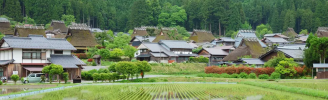
The general topography of the Gro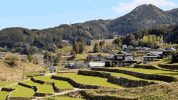 ves is first and foremost a soil of agriculture and farmlands. The further one progresses towards the east coast, larger fields, greenhouses and lands dedicated to livestock shift in favour of shrines dedicated to Inari Ōkami and farmers' housing. Upon reaching the downtown area, local community buildings include a dedicated doctor, shops and weekly farmers markets. Located closer to the ocean, educational institutions for children comprise a kindergarten as well as a primary school. With a large yet very tight knit community, their dedication to labour is one truly respected for they seem to find genuine purpose in their activity. Pretty much akin to their architectural style appreciating a mixture of rudimentary, traditional roots and modern features, they progress in means yet uphold traditional practices, ethics of production; first and foremost favouring quality to quantity. This mentality has nonetheless allowed a significant portion of their production as exports for the mainland. Steady practices paired with dedication, do yield about sixty percent of the island's annual production.
For several centuries, transportation on this side of Izu Karakura mainly consisted of paths through Itsbyoshi Forest, until docks were established on the east coast and train tracks built across the forest. The development of such infrastructures largely benefited domestic trade between the farms and the main city, as rumors of the ill-omened forest capturing merchants and supplies progressively vanished. This way, modern roads currently offer a more convenient way of travel, needing about thirty-nine minutes of travel by car and one hour thirty-six minutes by train. Nonetheless, the latter remains the most favored option as Karakurans do not frequently own personal vehicles.
ves is first and foremost a soil of agriculture and farmlands. The further one progresses towards the east coast, larger fields, greenhouses and lands dedicated to livestock shift in favour of shrines dedicated to Inari Ōkami and farmers' housing. Upon reaching the downtown area, local community buildings include a dedicated doctor, shops and weekly farmers markets. Located closer to the ocean, educational institutions for children comprise a kindergarten as well as a primary school. With a large yet very tight knit community, their dedication to labour is one truly respected for they seem to find genuine purpose in their activity. Pretty much akin to their architectural style appreciating a mixture of rudimentary, traditional roots and modern features, they progress in means yet uphold traditional practices, ethics of production; first and foremost favouring quality to quantity. This mentality has nonetheless allowed a significant portion of their production as exports for the mainland. Steady practices paired with dedication, do yield about sixty percent of the island's annual production.For several centuries, transportation on this side of Izu Karakura mainly consisted of paths through Itsbyoshi Forest, until docks were established on the east coast and train tracks built across the forest. The development of such infrastructures largely benefited domestic trade between the farms and the main city, as rumors of the ill-omened forest capturing merchants and supplies progressively vanished. This way, modern roads currently offer a more convenient way of travel, needing about thirty-nine minutes of travel by car and one hour thirty-six minutes by train. Nonetheless, the latter remains the most favored option as Karakurans do not frequently own personal vehicles.
Linguistics and culture
Natural consequence of an isolated location, culture and linguistics specific to the Groves have developed and established itself in the area. The Yagi dialect is characterized by shortened syllables and looser articulations, placing a focus on an easier and quicker form of communication shortening sentences. Often described as the Yagi accent, it is essentially noted during casual exchanges or among locals in general aspects.Local religious beliefs equally bear their own specificities within the confines of agricultural valleys. While Karakura presented its Monastery as a central place for worship, the Groves embraced the constraints of its people living scattered across the land. As such, several but smaller shrines were built throughout the fields populated with farmers, establishing a tradition of worship accessible for commoners in their daily lives, rather than a single one for grand ceremonies. A larger shrine was nonetheless made for prayer in the mountain side of the Groves, which included a longer path adorned with Torii Gates along the climb. Predominantly built in the name of Inari Ōkami, these shrines would often be where children of the Groves learned of prayers passed down through generations.
A prayer to Inari Ōkami
 Humbly, I approach the kami of Inari in prayer.
 With awe and reverence,
I humbly speak these words:
Morning and night, I will diligently work at my tasks,
My loved ones will not lessen their focus, nor will we neglect anything undone.
I pray that the kami bestow on me encouragement and support to meet all challenges.
Grant that the divine winds bring prosperity to those my heart holds close.
Bestow long life that is strong and solid.
Grant that our descendants, for countless generations,
Know protection, health, and longevity.
Grant us safety from malevolent kami, and grant that our homes and our bodies be protected from any malevolent deeds.
If I commit an error, if I stray from my intended path, I pray that the kami help me correct my way.
That once again I may hear clearly,
That once again I may sit with open mind.
Protect us in night.
Protect and shelter us in day.
Grant me happiness.
Grant those I love for, all the same.
With awe and reverence, I humbly speak these words.
Celebrations mark a strong cultural specificity for the Yagi Groves, as complementary traditions are upheld across the calendar. The festive season begins in Spring with the return of agriculture activities, inaugurated by the spring festival. At the approach of winter and the beginning of Christmas time, children traditionally withdraw indoors to practice arts and crafts. Throughout the month of December, they are then seen going door to door to give their works to each villager for them to adorn their homes with. The children whose birthday is around that time would see their crafts hung up until the day is met, when they can thus attach it to the Great Tree.
Local architecture and landmarks
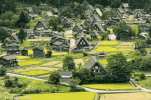 The central area of the Groves presents a very traditional Japanese architecture reminiscent of our Saiky Estate, with each outbuilding and structure circling the great tree: testimony of time, bearing sole companionship of a semi-rebuilt shrine. No matter the path one chooses to borrow while treading through the Groves, everything seems to circle and slither back here. The 'Great Tree'. The Groves' center, its core, the most ancient component and one to naturally lure wandering souls. As the Yagi Family inherited the Groves in the seventeenth century from the Aguri Family, the tree already stood there solid. It remained through the centuries and kept on growing, a lacing of layered wood and ancient knots whose sole disturbance consisted of a singular scar on one side, a burn. Yet contrary to what some may surmise, it bears no ties with the Hōka-han Senshi from the Edo Period but rather, related to the sinister fire which ravaged the territory in 1832.
Keepsakes
It is basking in the great tree's shade, that stands a building refurbished from the same burn. Used as a shrine of sorts and some of its original structure still being there, several items are stored within: many of which are keepsakes, art formally made and more unique kinds including family heirlooms. The Yagi did not wish to use it as a proper house back then and so made it into that lesser shrine dedicated to the storage of keepsakes. The most ancient of those, presents as a single plank of wood borrowed from the great tree; to anyone's eye the state of such a piece remains remarkably pristine despite having withstood the trials of weather and time. A brief mention inscribed, reads the following:
"This day forward, Ueyonabaru Yagi is banished from the Groves,
never allowed to step foot on its soil."
- Moriyasu Yagi
never allowed to step foot on its soil."
- Moriyasu Yagi
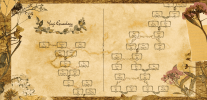
[!] A clean picture of what appeared to be a scroll. [!]
Establishment of the Groves
Historically, the Groves were first led by the Aguri Family. Earliest writings and notions of them being on the east coast trace back to 1328, but records formally begin with the arrival of Ueyonabaru Yagi wedding into the Aguri Family. While not necessarily the founder of the area as the Aguri were, Ueyonabaru is considered as the one who started giving historical significance to the Groves. Knowledge on his character is scarce; for his son Moriyasu—one to knowingly despise his father yet love his mother fiercely—thoroughly buried that name. The transition between the Aguri Family and Yagi Family came through marriage: Ueyonobaru took Gou Aguri as his second wife after the passing of Ukita Kome-Yagi and birth of Moriyasu. Gou eventually passed away, and a good relationship between the Aguri and Yagi led to the former allowing Ueyonabaru to take ownership of the Groves, which was then passed down to his son.
From Moriyasu Yagi came the second skill the Yagi were historically known for beside agriculture, which is art. He received ownership of the Groves from his father on one side, and the heritage Moriyasu retrieved from his mother was that of art. Ukita's historical records were preserved, depicting her as a rather sad and quiet individual, one to spend most of her days painting in a room, avoidant of speech to the point of drawing some more obscure rumors on her name. Yet even though such an odd frame was given of her, she was treasured by her son who dedicated hours by her side, painting together among other arts for the sake of spending time together. An old but well-preserved painting of the woman remains at the Groves to this day, known to be made by Moriyasu himself.
Less is known of the Aguri Family's whereabouts for that time period, though historical assumptions point at an alleged presence within Tsubasa. Originally known to supervise trade of agricultural goods thanks to their knowledge of the merchandise, they progressively grew involved in the Karakuran political frame. Consequently, the Aguri name was brought to distinction on the 3rd of September 1696 as the family officially received the prestigious title of Itsbyoshi Family for the newly established Itsbyoshi Court.
The Edo Famine and Itsbyoshi Court
The second milestone in the Groves' history speaks of a drought which plagued the island in 1778, as Karakura scrambled for food and local conflicts bursted. Growing into the greatest famine known to have occurred within recorded Karakuran History, the disaster found resolve after more than two decades of struggle during which Kaori tragically passed away. It was through the relentless contribution of Imagawa and Akihisa Yagi, that control was ultimately regained over the situation in 1800. The Yagi's hard and earnest work paired with the Aguri's declining alignment with the Itsbyoshi Court's values, led to the latter hosting a formal festival in late spring of the same year.
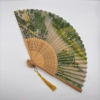
Requesting the blessing of Chiharu-Yamatsumi alongside Inari Ōkami, the title of Itsbyoshi was thus bestowed from the Aguri Family upon the Yagi Family - for they had successfully helped Karakura out of the famine. The ceremony was held amidst the falling wisteria petals of the Great Tree, considered to be good luck still to this day. Along with the title, political supervision of agriculture was handed to the Yagi lineage so they could fully support the island's agriculture, as they had established proof of their skills. All responsibilities having been transmitted, the Aguri Family left Karakura and returned to the mainland. It is unknown what happened to them once they had left the island, but their dedication to the Groves that sustained Karakura for decades remained revered. In late 1800, as Akihisa wed Lady Hina Ikehara, a family heirloom was gifted to the newlyweds: a fan from the Mother of Clan's collection to be passed down onto their descendants. From then on, any member of that bloodline would hold that title and honour.
The Heya Fire
The firstborn of the Yagi lineage under the title of Itsbyoshi, Uesugi Yagi, wed Ikejiri Heya-Yagi who soon inscribed her name down in History in ashes. She gave birth to a daughter and son, respectively named Matsudaira and Makoto; the latter being still a newborn that, at the dawn of the year 1832 on January 23rd, their mother attempted to burn down the Yagi Groves. Ikejiri's motive for doing such an act remained private, many seeing there an act of insanity for she had intentionally left her children inside the burning buildings and had been known prior for unfortunate stress. Nevertheless, it was under the ostensible weight of guilt for murdering her young ones that the mother ran back herself into the house to retrieve them. Matsudaira, then aged five years old, survived with injury whereas the younger Makoto did pass on before reaching a full year of age, along Ikejiri herself. After the tragedy, the Groves were diligently rebuilt as several relationships rekindled for couples across the lineage.
The Yagi Medical Branch
With growing numbers of descendants for the Yagi lineage, Yasue Yagi moved to Karakura City where she diligently worked under Yada Higashi, caring for him until his dying day. She was appointed Director of Karakura Hospital on November 6th, 1948, but the position did not last. Corruption was spreading on the island under the name of Otori, whose displeasure with Yasue's tenure as the Hospital Director manifested in several ways. After a year of operating and financial pressure, the Otori government had built sufficient influence from within the Hospital to progressively strip Yasue of her powers until forcing her resignation in 1949 to allow complete government takeover. Their outreach came as far as the east coast for a delegate was even sent to the Yagi Groves in an attempt to push their influence there. The endeavour was met with failure, for the envoy promptly retreated after being apparently led all over the Groves for a tour by Yuan Yagi, head of the area in those years. Nevertheless, the corruption came under scrutiny in 1954 and Yasue ultimately retrieved her position, henceforth contributing to the progressive eviction of the Otori from higher-up positions in Karakura. Reasons for the Director's prior resignation were thus made public, marking her return to proper functions.
Thanks to renovated health infrastructures, modernized clinical equipment and funded medicine, Yasue Yagi took Tenzo Ichikawa as her apprentice and stood through the local turmoil to turn the page and continue ensuring medical care for those in need. Yasue's core contribution of the time consisted of rekindling the trust of the citizens within the Hospital, doubts having settled in the authenticity of medical diagnosis. A task far from being easy, as the challenging authority of Teshima Psychiatric Hospital loomed over the healthcare system; the Yagi name yet once more lived up to its reputation for earnest dedication and hard labour, for trust was eventually restored.
Throughout the numerous paranormal events of the Itsbyoshi Rise, concerns of the like rose within the Hospital for which Yasue thoroughly handled the matters with patience and care. She held up a new reputation, one to have silenced the paranormal activity within the hospital and returned the unfortunate souls to rest. At last, upon her own passing in 1970, Yasue's children branched out into a medical and farming side—both of which remained within the Groves whereas Junko Yagi's side moved away to Kyōto in 1971. That branch was thus dubbed Tabibito「旅人」and specific houses were left unclaimed across the Groves, with a purpose of hospitality for her descendants should they choose to return.
Present days
Junko Yagi's descendants effectively returned in 2020 to live in the Groves, while the now elderly woman remained within her residence in Kyōto, away from painful memories of her time in Karakura which included the political turmoil and her sister's passing. This return was marked by her granddaughters Jun Yagi and Hana Yagi who held positions within Karakura City. Hana Yagi graduated with her master's degree on August 20th, 2021, pursuing a professional career as News Reporter in 2022-2023, Psychiatrist in 2024-2025 with a thesis focused on ASPD and titled 'Mirror of the Soul', then eventually returned to working with children in Tokyo and currently still lives at the Groves. She also held a short term of a few days as acting Publisher for Karakura News Station in 2025. Jun Yagi, on the other hand, began her career as a Nurse for Karakura High School and Community College on January 18th, 2025, before being appointed as acting Mitsue of Shinsei Seinaru Monastery on June 1st, 2026. A few other descendants of the younger generation also populate Karakura to this day, enrolled as students to pursue higher degrees than what is available at the Yagi Groves. Throughout History, the Yagi Family consistently remained one tied to its roots, humble and discrete for they ever sought earnest work and unconditional service for others. A warm-hearted nature shared with the Grovesfolk, that lives up to its reputation still to this day.
Bibliography
The History of Karakura - Professor Hashirama Takagi
Modern Day Geography - Karakura Public Library
The History of Karakura Hospital - Karakura Public Library
Modern Day Geography - Karakura Public Library
The History of Karakura Hospital - Karakura Public Library
Last edited:


