
Behind the Uniform: Voices From Karakura's Workers
By Lysander ValeKarakura has more than its share of local folks who do jobs we don't think about until we actually need them. Officers stand watch in the street, doctors slog through a packed hospital floor, shrine workers uphold a village tradition that's been around for generations. All of these jobs may seem different, but they all have responsibilities that aren't so apparent.
I have chose to sat down with a number of workers from different factions to learn about the people who hold these positions. Instead of just asking what their jobs entail, I wanted to ask what had brought them to work for said faction, what they wish the average citizen knew, and what they think could improve Karakura.

Officer Polina 'Lina' Velikey
Following a Familiar Path
For Polina Velikey, becoming an officer was partly inspired by someone she already knew well. Her father's career gave her an example to follow, but her own enjoyment of helping others became an important part of why she values the position.“Well, in all honesty Mr. Vale, my dad was an officer as well, and - it felt right to follow in his footsteps.” Another firm nod, reaffirming her point. “There's a lot of thing I enjoy about the job, but eh- helping people is the best part, I gotta say. Busting criminals is nice and all but - making someone's day just a little better is what it's all about.”
However, there's more to being an officer than just fighting crime. Velikey discussed a strained relationship that can sometimes develop between the KPD and those it is serving. She admitted there is frustration, but that officers are also worried about their own safety when they are out on the street.
“Y'know - that's a great question. There's actually quite a lot of that going around. I am not blind to the obvious resentment towards KPD officers. However, we are here to do our jobs, in the safest way possible. That doesn't mean just protecting civilians. We have to protect ourselves as well.”
After taking another moment to think about her answer, she added:
“If there's one takeaway from this - I think it should be that... We're human too. Just like you, and your friends, and family. We make mistakes, we fix them. We understand your frustrations, but - we have to do our jobs safely.”
For Velikey, understanding the KPD also means remembering that the people behind the uniforms are human beings themselves.

Doctor Orxan N. Kuroda
From Helping Children to Saving Lives
Kuroda first took a path to take him far from Karakura. Having grown up in Azerbaijan, he got to know the orphanage and eventually became a kind of older brother to them. Supporting them when they fell ill or got injured led him to choose medicine.“Well, back in my home country of Azerbaijan, I lived next to an orphanage for a bit and was basically an older brother figure, the kids often got sick or hurt and I ended up treating them as well, I have always wanted to save lives and make sure people are as healthy as they can be. So I decided to enter this field so I could help more peopple and save lives, though I specialized in general surgery, and pediatrics”
His experience also seems to have shaped how he views the medical profession today. To Kuroda, the job isn't as simple as treating someone and immediately sending them on their way.
“Our jobs as doctors are very high stress and high maintenance, it may seem simple but it takes a lot of time and learning as well as a two week training. SOmething people seem to not realize is we get tons of patietns everyday, and that leads to waits, we prioritize more life threatening injuries when we have a full lobby, and these operations can take hours. but I think the BIGGEST things people don't realize is that we do not have answers to everything or instant fixes. We advise and treat what we can but we don't hold the worlds knowledge”
That workload also means that the community can play a role in making things easier for medical workers. Kuroda's first response was short, but he followed it with several practical suggestions.
“I mean most obvious answer was do less criminal activities”
He continued:
“But seriously? hmm, it's tricky to answer. I guess just noticing that us as EMS do have heavy work load and sometimes we need utmost patience. Mmm, if you are sick you can pick up a mask here at the hospital to help prevent spreading sickness. Just stay hydrated, and take medicines like paracetamol and cough syrup. Oh! I highly recommend getting general check ups, and if you think there is something specifically wrong, or just doesn't feel right, we also do diagnostic check ups. There is basic injuries citizens can treat too, like small cuts, and bruising on limbs and suchbut if it looks swollen come in”
His advice ultimately came down to patience, prevention, and knowing when something needs professional attention.

Maiden Lyanna Baek
Finding Her Place at the Shrine
Baek first developed an interest in the shrine through her work with her aunt. What began as an interest in her aunt's career quickly became an interest in Shintoism, and she eventually shifted her studies to focus on the religion.“I only grew an interest for it when my auntie began to work here! I'd ask her questions regarding it, and focus my studies to be more directed to Shintoism, so naturally, when she left the shrine, I slipped in!”
That connection seems to have influenced how Baek views the shrine's relationship with the wider city. She explained that some citizens only interact with the monastery during festivals, even though the shrine would like to see them more often.
“A lot of the time, people misunderstand why we're here! With some people only learning to engage with the monastery when festivals happen! I'd really REALLY like for people to understand that we want them here! Sure, we have rules, but who doesn't? There's quite a lot the citizens on this town could learn, especially -”
Baek also touched on the way disagreements can grow when communication breaks down. Rather than immediately focusing on the final outcome of a conflict, she suggested looking back at how it started.
“I've not seen much of the bad occurrences that people talk aobut so much. . But I have spoken about it. I feel everyone just needs to calm down a bit? A lot of the time, these occurrences happen from small things, that then spiral into the bigger things, with communication being lost a lot of the time. Perhaps everyone should try and backtrack to why it got so bad; It might very well -”
Even though her final thought was cut short, her message about communication was clear: problems can become much larger when people stop talking to each other.
Priest Surisaa Heddo
A Different Side of Shrine Life
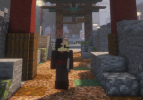
For Surisaa Heddo, the shrine wasn't something completely unfamiliar. She grew up around Shinto because of her parents and also had a family connection to the shrine itself.“Well, My auntie was the shrine lead until she quit and Mi stepped up. I also wanted a peaceful life. I grew up around Shinto because of my parents, Despite others in my family not being as so religious.”
Heddo also wanted to push back against the assumptions people sometimes make about shrine workers. In her view, there is much more to the religion and its community than what people may see from a distance.
“That we aren't just some weird mountain dwellers. That our religion is actually a beautiful experience. From learning to preaching.”
When it came to the wider community, Heddo kept her advice simple. She described the atmosphere around the shrine as noticeably different from the negativity she sees elsewhere.
“Spread positivity... It seems like everything these days is negativity... Up in the shrine its the complete opposite.”
Her response highlights a small but meaningful idea: sometimes improving a community can begin with the way people treat one another in everyday situations.
Detective Kokoro Asōgi
Looking Beyond the Badge
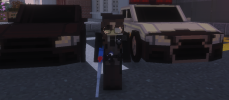
Asōgi kept the personal side of her answer brief, choosing not to go into details about her background. Instead, the conversation quickly shifted toward her experiences within the KPD and how citizens view the department.“Well. I didnt to put it simple.”
The detective division is naturally more private than many other parts of the KPD, something Asōgi pointed out herself. Because of that, she focused her answer on the department as a whole and the relationship it has with Karakura's residents.
“Well I cant say much about the division itself, Its rather secretive. I can speak about the entire KPD though. Something people dont seem to understand is we are here for you, Not against you. Especially with all the recent townhall drama people seem to think we are against them, But that is not the case,”
Her final answer moved toward the subject of conflict and the ways citizens choose to respond when they feel threatened. Asōgi acknowledged why some people may want protection, but argued that problems do not always need to become confrontations.
“Thats a good question Mr Vale and i have an answer. As a officer i completely understand when people tell us they carry a bat for protection. I completely get it, Karakura at times feels unsafe and I myself carry my stun blaster and tranq too. Us officers carry legal police weapons. So I get it... but one thing I will say is, Problems can be solved with peace, Not bats and knives or whatever weapons people carry. Violence is just... not an acceptable answer. People need to use words and kindness more. Oh and smile, Seeing people smile makes my day.”
Her closing thought was perhaps one of the simplest answers given during the interviews: kindness still matters, even in a city where tensions can run high.
Behind the Positions
Having heard both these types of workers, I knew the differences and some similarities between them. Why each worker joined their respective sets was varied and included family, childhood, religious or missionary interests and personal connections.What I found most striking was how frequently all the responses returned to interactions between workers and those they serve. Whether it was an officer asking for understanding, a doctor seeking patience, a shrine worker asking for conversation, or a detective advocating for peaceful solutions, they each had their own insight to share.
Positions are always about more than just the name - and sometimes finding out who's in them simply means asking.
This post was made by @brepaopu


