

Backstory of Kyung Su♥
Chapter One: The Silent North
October 12th, 1985
Somewhere in the northern wilderness of North Korea
The mountains were always quiet. Too quiet.
Snow fell like whispers on the rooftops, soft and steady, hiding the harshness of the concrete world beneath. In the remote village where Takuya was born, silence wasn’t peace—it was survival. People didn’t speak freely. Even a word carried too far on the wind could cost someone their life.
Takuya’s earliest memories were of gray: gray skies, gray walls, gray eyes of adults who never smiled. He remembered his father’s silence more than his voice, and his mother’s tired eyes more than her touch. Hunger was as familiar as cold. He often slept with an empty stomach, curling beside his younger brother under a tattered blanket, trying to imagine what warm bread tasted like.
They were not poor by the local standard—they were average. And average meant invisible, which was safest. Still, even as a boy, Takuya noticed things. Like the way a neighbor’s house would go dark and silent overnight, only for the family to never return. Or how adults looked away when soldiers passed.
He learned young that questions were dangerous.
But when Jinue appeared in his life, something shifted.
She was bold in a way that unsettled him. While others kept their heads down, she looked up. Her eyes held a fire Takuya had never seen before. She once whispered to him, “Do you ever wonder what’s outside these mountains?” He said no. But he did wonder—every night.
They were teenagers when they fell in love—if love could even exist in such a place. It was fragile and hidden, like a flower blooming in concrete cracks. They met in secret, exchanging smuggled books and scraps of news from the outside world.
And one day, they made a choice. A dangerous, desperate choice.
They would escape.
The night they left, the sky was clear and moonless. They walked for miles through woods and frozen streams, avoiding patrols and checkpoints. Every crack of a twig sent a surge of panic through Takuya’s chest. Jinue held his hand, never wavering, even when the icy river reached their waists and their bodies shook uncontrollably.
They didn’t look back—not even once.
Chapter Two: Whispers in the South
South Korea felt like a dream at first.
After weeks in hiding, interrogation, and debriefing, they were granted refugee status. But freedom came with its own price.
The streets of Daejeon buzzed with life—cars, neon signs, laughter, and the smell of food Takuya had never tasted before. But beneath the noise was a different kind of silence. A suspicious one. People smiled at them, but only with their mouths. Behind their backs, the whispers started.
"Were they really defectors?"
"Or spies sent from the North?"
"What happened to their families?"
Takuya heard the questions even when no one asked. He felt it in the way people hesitated before shaking his hand or how neighbors avoided eye contact. He understood. Fear was a hard thing to unlearn—he carried it too.
But Takuya and Jinue didn’t stop.
They enrolled in language classes. Studied late into the night. Lived in tiny rooms and worked odd jobs. Eventually, they married in a quiet ceremony in their early twenties—no guests, no photos, just vows whispered with trembling hands.
Behind the joy, a shadow lingered. They never spoke about the family they left behind. But Takuya knew. By escaping, they had condemned them. Punishment, imprisonment—maybe worse. That guilt became a silent weight between them.
Still, they moved forward.
Chapter Three: The White Coat
Daejeon, South Korea
Six years after defecting
Hospitals had always frightened Takuya. Not because of blood or death—those had long since lost their shock—but because they reminded him of helplessness. In the North, hospitals were cold buildings with no medicine, no answers, and often no return. But in the South, they were different. Bright. Clean. Full of possibilities.
After years of studying, working night shifts, and translating textbooks with a dictionary by his side, Takuya stood at the threshold of something he never believed he could reach—medical school. Not just any program, but an international one. The opportunity to study abroad came like a sudden sunrise. It meant leaving Jinue behind temporarily, but also meant finally standing on solid ground after years of climbing.
Jinue, now pregnant with their first child, didn’t protest.
"You have to go," she said, gently placing his hand on her belly. "Do this for all of us."
So he went.
Overseas
The country he moved to was different in every way—language, culture, even the air. But the one constant was work. Takuya threw himself into his studies with the same desperation he had when crossing the border years ago. Failure was not an option. Every page of anatomy, every late-night review, every exam was a step further away from who he used to be.
That was when he met Se-Jin Minori.
She was a curious blend of warmth and steel. Half-Korean, half-Japanese, with sharp eyes that saw through excuses and a smile that made people feel safe. Like him, she was pregnant. Like him, she worked three jobs to survive. They met during a clinical rotation and bonded instantly over caffeine, exhaustion, and shared burdens.
At first, they studied together. Then they started walking home together. Then they became roommates—two students, two growing bellies, one cramped apartment with peeling wallpaper and an electric stove that only half-worked.
People whispered. Just like before.
But this time, Takuya ignored them.
There was never romance—only understanding. They were comrades, bound by hardship and mutual respect. Late at night, they’d sit on the floor, textbooks scattered around them, and talk about their unborn children.
“Do you think mine will look like me?” Se-Jin would ask, resting a hand on her stomach.
Takuya smiled softly. “I hope mine gets Jinue’s eyes.”
Letters and Longing
He wrote to Jinue every week. Long letters, full of updates, jokes, and sketches of the life they’d build. She wrote back, always encouraging, always loving. Her handwriting grew shakier over time, and then one day, a letter came not from her, but from a neighbor:
“Your daughter has been born. A healthy girl. Jinue is doing well.”
He wept for hours. Not because he wasn’t there, but because they had made it—somehow, they had made it.
They named her Yurim.
Two years later, when he graduated and returned home with his white coat and a heart bursting with pride, Jinue greeted him at the station with Yurim in her arms.
A second child was already on the way.
Her name would be Kyung.
They named her Yurim.
Two years later, when he graduated and returned home with his white coat and a heart bursting with pride, Jinue greeted him at the station with Yurim in her arms.
A second child was already on the way.
Her name would be Kyung.
A New Oath
Back in Daejeon, Takuya didn’t rest. He couldn’t. He had learned too well how quickly things could be lost.
He applied for a military program—medical corps, with a specialization in Explosive Ordnance Disposal (EOD). The training was brutal. The risks were real. But the salary and stability gave his family what they'd never had before: security.
It wasn’t just about duty—it was about providing.
Takuya served with honor, rising to the rank of lieutenant. He disarmed bombs, treated wounded soldiers, and kept a photograph of Jinue and the girls inside his uniform. Before every deployment, he held his daughters longer, watched Jinue a little more closely, as if trying to memorize her.
Time was never promised.
Chapter Four: The Door That Didn’t Close
“Appa, when are you coming back?”
“Soon, my Kyung-ah. I’ll be home soon.”
Takuya returned from service two years later. Older. Tired. But grateful.
He found work at a hospital in Daejeon, using his experience and medical degree to help those in pain. He smiled more now. His daughters were growing—Yurim, quiet and observant like her father. Kyung, stubborn and fiery like her mother.
They were happy.
Until the night everything changed.
Chapter Four: The Door That Didn’t Close
Daejeon, South Korea
Two years after military discharge
It was a quiet night. The kind of quiet that feels unnatural—when the city hums softer than usual, and even the stars seem to hold their breath.
Takuya was home late from the hospital, his shift ending past midnight. He’d tiptoed into the girls’ room like he always did, brushing a kiss across Yurim’s hair, tucking Kyung’s feet back under her blanket. They didn’t stir. He lingered in the doorway, just watching, wondering—as he often did—how he had come this far.
Then came the knock.
Soft, deliberate.
He opened the door without hesitation.
The man standing there wore a uniform. His expression was taut, carefully arranged, like someone holding in a scream.
Takuya knew instantly.
He didn’t hear all the words. He didn’t need to.
“There was an accident.”
“A drunk driver—intersection near the market.”
“She didn’t suffer.”
No matter how many ways they tried to soften it, the truth remained: Jinue was gone.
His knees gave out before his mind caught up.
His knees gave out before his mind caught up.
The Hollow Hours
The funeral was small. Too small.
Some neighbors came. A few colleagues. But most people simply watched from a distance. Murmurs started again—the kind that had haunted them when they first arrived in the South.
“She escaped a regime but couldn’t escape the street.”
The girls were too young to understand. Yurim was six. Kyung, four. They clung to Takuya’s legs, confused by the black clothing and the incense, by the faces of people crying over someone they barely knew.
At night, he sat by the window long after they fell asleep, clutching the last photo they’d taken together—a simple picture at the park, Jinue mid-laugh, the girls covered in ice cream.
There were no answers in the silence. Only pain.
Holding the Line
Takuya could have collapsed. Could have given in to the ache that twisted his insides every time he saw Kyung’s eyes—Jinue’s eyes—or heard Yurim hum the lullabies her mother used to sing.
But he didn’t.
Because they were watching.
He never touched alcohol. Never let grief turn him into something he wasn’t. Instead, he worked. Extra shifts. Emergency calls. Long hours. He took time off when it mattered—school events, bedtime stories, birthdays. The girls didn’t have a mother, but they had him.
He became mother and father, protector and provider.
He cooked, cleaned, cut their hair, taught them to tie their shoes, walked them to school. He sewed buttons, practiced reading with them, and stayed up late helping with math he barely understood himself.
But he gave them more than routine.
He gave them strength.
A Father’s Teachings
Takuya didn’t just raise daughters. He forged warriors.
Knowing how children of defectors were often ridiculed, he enrolled them in self-defense classes. But he taught them more than how to fight—he taught them when not to. He taught them how to speak with clarity, how to carry themselves with confidence, how to look people in the eye and say, “I’m not afraid.”
He told them stories—not just about North Korea or survival, but about their mother. Every bedtime, he’d share pieces of her: the way she laughed with her whole face, how she refused to walk behind him, how she once stole a flower from a military officer’s garden just to give it to him.
“She was braver than me,” he’d say. “And stronger than anyone I’ve ever met.”
The girls listened in silence, absorbing every word.
Echoes
Years passed.
The girls grew.
Yurim became thoughtful, patient, and grounded. She never forgot how her mother’s absence shaped her father, and often stepped in when he forgot to care for himself.
Kyung, on the other hand, became a force. Fierce, emotional, unwilling to let the world forget what they lost. She didn’t cry often—but when she did, it was like a storm that passed through the entire house.
They both carried Jinue in different ways.
So did Takuya.
Some nights, he still dreamed of her—waking up with her name in his throat, his hands reaching for someone who wasn’t there.
But he always rose, always dressed, always showed up.
Because that’s what she would have done.
Chapter Five: The Bench in Karakura
Karakura, Japan
Six years after Jinue’s death
The sea in Karakura was different from the waters of home. It wasn’t wild and rushing—it whispered. Every wave seemed to carry a memory ashore and pull another one back with the tide. That’s what Takuya liked about the small island city: nothing here demanded anything of him. Not at first.
He had come to Japan for a temporary research exchange—nothing permanent. Just six months away from South Korea, away from old grief and new responsibilities, though he checked in with Yurim and Kyung every night without fail.
It was supposed to be a break. A moment to breathe.
Then he saw her—Sakura.
She sat alone on a bench overlooking the coast, wearing a soft blue scarf that danced in the wind. Her eyes were closed. Her face still, as if she were listening to something deep beneath the waves. Takuya wasn’t sure why he spoke to her.
Maybe because she looked lost. Maybe because he was.
“Beautiful view,” he said in Japanese, quiet and cautious.
She opened her eyes and nodded. “It always is. Even when you're too sad to see it.”
He didn’t know it then, but that was the beginning.
He didn’t know it then, but that was the beginning.
Something New
Sakura was older than she looked. A mother of several, two of them already grown. She was soft-spoken but sharp—a woman who’d learned to survive by watching everything and revealing little. She worked at a small bookstore near the local train station. They began meeting for coffee. Then dinner. Then long walks along the coast that blurred into hours.
She never asked too many questions. That’s what drew Takuya to her.
With Sakura, he could breathe without explaining himself.
One year later, they married.
A Fractured Family
It wasn’t a storybook romance.
Sakura had children from previous relationships—children who carried scars Takuya couldn’t heal. One was involved with local gangs. Another disappeared for days at a time. Despite his best efforts, his words rarely reached them.
He tried. He tried so hard—lectures, advice, sitting up waiting by the door. But his guidance fell on deaf ears.
Then came the funerals.
One child, then another.
Overdoses. Violence. Poor choices. Unforgiving consequences.
Takuya felt the walls of their fragile family crack. Sakura grew quiet again—withdrawn. There were days she didn’t speak at all. Nights she sat in that same bench by the sea, staring at the horizon like she was waiting for someone who would never return.
And Takuya? He broke in silence.
Walking Away
At thirty-nine, Takuya made a decision.
He left.
He didn’t scream. Didn’t blame. Just packed his things, kissed his newborn son goodbye, and returned to South Korea. He moved back into the house in Daejeon—the one he had kept all those years, untouched, as a memory, a promise.
Yurim and Kyung were older now. Young women. They were glad to have him back, but they sensed the change in him—the weight behind his eyes, the weariness in his movements.
Kyung, especially, was furious.
“You married her? After everything Mom did for you?”
Takuya didn’t argue. He simply nodded.
“I didn’t replace your mother,” he said. “I just… couldn’t live in silence anymore.”
One Last Try
Two months passed before he made another choice.
He moved the girls to Karakura.
Not to live with Sakura, but to visit, to see their half-siblings, to understand that despite everything, family was still family.
Before they left South Korea, Takuya signed a lease for their childhood home. He didn’t tell them at first—it was meant to be a secret. A guarantee. If things went wrong in Japan, they’d always have a place to return. A place where their mother’s spirit still lingered in the walls, in the garden, in the quiet.
Then came the moment he couldn’t avoid: he filed for divorce.
It was too much—the grief, the guilt, the tension between families.
But Sakura came to him.
Not in anger, not in desperation.
In quiet honesty.
They talked for hours, beneath a moonlit sky, after the children had gone to bed. She admitted her pain. He admitted his guilt. And in that broken, trembling moment—they found each other again.
He canceled the divorce.
They stayed together.
But the bond with his daughters? That would never fully heal.
The Unspoken Line
Yurim tolerated Sakura. Enough to be polite. Enough to sit through family dinners and help with the younger siblings. But Kyung? She never forgave.
She smiled for her father’s sake, but behind her eyes burned a quiet rage. Sakura was a name she rarely said aloud. A person she would never call “mother.”
Still, both daughters loved their half-siblings. The innocent children caught in the middle. They read them stories, taught them songs, helped them with homework. Because that’s what their mother would have done.
Chapter Six: The Birthday at the Grave
Daejeon, South Korea
June 28th
The air that morning was still. Heavy with summer heat and something else—grief that had settled quietly between the three of them, like old dust in a room long untouched.
It was Jinue’s birthday.
Takuya hadn’t spoken much the night before. Neither had the girls. There was no need. They had done this journey before, but each time felt different—older, quieter, and somehow more unbearable.
The train ride was long. Yurim stared out the window, earbuds in, but no music playing. Kyung tapped her knee endlessly, unable to sit still. Takuya held a small bouquet in his lap: white lilies and forget-me-nots, wrapped in simple paper.
They said nothing the entire trip.
The Hill
The cemetery was nestled on a quiet hill just beyond the edge of town. Simple. Serene. The kind of place where even the wind whispered gently through the trees.
They climbed in silence.
Jinue’s tomb was marked by a clean stone, her name etched deep and clear, surrounded by weeds Takuya always trimmed himself. Beneath it lay no grand legacy—no riches, no accolades. Only a life that had burned fiercely, briefly, and left everything it had behind.
Kyung knelt first, brushing dirt from the stone. She didn’t cry. She rarely did.
Yurim placed a folded paper crane on the edge of the marker, a quiet ritual she repeated every year. A child’s tradition grown into habit.
Takuya stood back, hands in his pockets, staring.
Then, finally, he stepped forward and whispered:
“Happy birthday, Jinue.”
No one replied.
And yet, all three of them felt her there.
They sat for hours. Not speaking, not moving much. Just being. As if the world outside had stopped existing. Birds chirped. A breeze stirred the grass. Somewhere far below, the city hummed—but here, time didn’t touch them.
Takuya thought about everything.
How they had run through forests in the dead of night. How they’d whispered about freedom in a place where hope was dangerous. How she had smiled with cracked lips and tired eyes, always somehow more alive than anyone he’d ever known.
He missed her still.
Not just her presence—but her anchor.
And yet, all three of them felt her there.
They sat for hours. Not speaking, not moving much. Just being. As if the world outside had stopped existing. Birds chirped. A breeze stirred the grass. Somewhere far below, the city hummed—but here, time didn’t touch them.
Takuya thought about everything.
How they had run through forests in the dead of night. How they’d whispered about freedom in a place where hope was dangerous. How she had smiled with cracked lips and tired eyes, always somehow more alive than anyone he’d ever known.
He missed her still.
Not just her presence—but her anchor.
The Final Stop
The next morning, on June 29th, they made one last visit.
A small alley near their old home. An unmarked wall where Jinue used to write poems with chalk for the girls. Of course, the chalk was gone now. The wall was painted over. But they remembered.
They each touched the stone in turn, then turned away together.
As they boarded the train back to Karakura, something unspoken passed between them—a shared agreement.
They would return every year.
They would keep her alive.
They would not let time erase her.
The Return to Karakura
Back in Japan, life resumed its rhythm.
The children played. Sakura offered small kindnesses, carefully avoiding Kyung’s sharp looks and Yurim’s polite distance. Takuya went back to work. But his heart remained split—one foot in the present, the other still walking that hill in Daejeon.
He didn’t ask the girls to forgive Sakura. He never tried to force love where it didn’t grow. But he reminded them, gently, that their younger siblings needed them, and that sometimes, being strong meant giving even when you didn’t receive.
And they did. Not for Sakura.
For the children.
Because they were Jinue’s daughters. And Jinue would never have let innocent hearts go unloved.
Closing of Part One
Takuya’s story, for all its tragedy, wasn’t defined by grief. It was defined by how he carried it. How he continued, year after year, to build, even as life took pieces away.
A refugee. A soldier. A healer. A widower. A father.
Not a hero. Just a man who never stopped trying.
His story wasn’t over.
Not yet.
Su Family Character's
Takuya Su ( Father )

Yurim Su (Older Daughter )
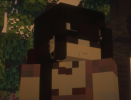
Yurim grew up carrying the weight of a twisted tragedy she barely understood, the sudden loss of her mother when she was just a child. She didn't grow soft or sensitive, she learned on how to quickly guard her emotions and rely on herself. Her father did everything he could to raise her with strength and courage, and it worked to a certain point. She grew up confident, bold, and unafraid to speak her mind, which sometimes gets out of hand and people could misjudge it as bluntness. At this age, living with her family in Karakura, there's still a stable bond with them. Although she and her sister live in their own worlds, there's quiet loyalty between them. She's always doing the most, not to show off, but because she wants to make the most of what she got, chasing what she is good at, keeping her guard up, and figuring people out along the way. Some people make it easy on her, and some don't, but that doesn't really bother her as much herself only.
Kyung Su ( Younger Daughter )

As a young girl, Kyung always wanted to be close to her mother. She found comfort in her presence and joy in the smallest shared moments. But after the accident that took her mother’s life, everything changed. The loss left a lasting mark on her heart—one she would carry for years to come. Since then, Kyung has grown into a quiet, sensitive soul. She's shy, often hesitant in unfamiliar situations, but still full of love, kindness, and care for others. Her father tried his best to guide her through those early years, but the shadow of grief often made emotional connection difficult. Though he remained present, he struggled to show her how to deal with complex emotions or relationships. As a result, Kyung found it hard to open up to others. She kept her walls up, unsure how to let people in—or how to let go. When the family moved to Karakura, a subtle shift began. Kyung changed—but only slightly. She still holds tightly to the memory of her mother, unable and unwilling to forget. Her father, now consumed by work, and her sister, focused on moving forward, have both found their own ways of coping. But Kyung remains caught between the past and an uncertain future. Now, she finds herself at a crossroads. With her family slowly moving on and her own heart still heavy with unspoken emotion, Kyung begins to ask herself what kind of life she wants to live. What relationships does she want to nurture? Who does she want to become? Though she may struggle—with connection, with trust, with vulnerability—there is strength in her softness. And perhaps, in the quiet town of Karakura, she might just start to heal.
Last edited: