
Solitaire
Level 0
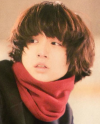
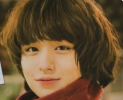
First Name: Daisho
Surname: Iyoda
Preferred Name: Daisho
Aliases: "Son / Sơn." (nickname, given by his mother as a way to preserve his Vietnamese middle name, rarely used in public, but carries personal significance within his family.)
- Gender: Male
- Age: 15
- Height: Approx. 5'9" / 175 cm (Still growing)
- Weight: Approx. 100 lbs / 45 kg
- Build: Lean / Average for his age
- Skin Color: Fair to light-medium tone
- Eye Color: Dark Brown
- Hair Style: Medium-length, thick, voluminous, with heavy bangs often falling across his forehead.
- Hair Color: Dark Brown / Black
- Fashion: Practical, comfortable, often layered, sweaters, simple t-shirts, jeans/cargo pants. Prefers neutral or darker colors.
- Abnormalities: N/A
- Date of Birth: September 27th, 2011
- Place of Birth: Karakura, Japan
- Nationality: Japanese
- Race: Mixed Heritage (Japanese and Vietnamese)
- Sexual Orientation: Heterosexual
- Religious Beliefs: Atheist
- Political Beliefs: N/A
- Diseases/Illness: None specified.
- Character Voice: Generally speaks quietly, often with a slight hesitation, especially around new people. He mumble or use minimal words. His voice can become clearer, a touch more animated, when discussing his specific interests (like vintage music, a complex gadget, or a movie he likes). Likely avoids raising his voice, even when annoyed.
- Clothes:
- Focuses on comfort and function over fashion trends.
- Commonly wears sweaters, plain or subtly graphic t-shirts, comfortable jeans or cargo pants with pockets.
- Prefers layers he can adjust. Footwear is practical: sneakers or sturdy boots.
- Colors tend towards muted or darker shades: grays, blues, blacks, an occasional deep red or forest green. Avoids bright or attention-grabbing outfits.
- Hobbies:
- Music: Listening extensively to a wide range of music, particularly vintage genres (60s-90s rock, pop, soul, city pop, electronic), game soundtracks. May quietly practice guitar.
- Gaming: Playing video games, likely favoring older systems or genres requiring strategy, precision, or exploration.
- Movies/Media: Watching films, especially those with strong visual styles (Wes Anderson, Takeshi Kitano), older action/comedy/political/war movies, and perhaps anime or shows with nostalgic themes.
- Observation: Quietly people-watching or observing his environment.
- Creative Writing/Idea Generation: Enjoys developing complex ideas or stories in his head or writing them down.
- Collecting: May collect small, specific vintage items (e.g., cassettes, game cartridges, small mechanical objects).
- Serious Problems/Flaws/Addictions/Disorders/Disabilities:
- Social Anxiety/Severe Shyness: Makes forming friendships and engaging in groups extremely difficult. Leads to avoidance and passive behaviors.
- Emotional Suppression/Fear of Conflict: Internalizes negative emotions (irritation, fear, envy) and actively avoids confrontation, leading to awkward defense mechanisms when cornered.
- Envy/Jealousy: Prone to comparing himself to others and feeling inadequate or resentful, though often hidden.
- Aversion to Medication: Strong dislike of taking medicine.
- Tendency towards Laziness/Lack of Motivation (for uninteresting tasks): Struggles to engage with activities outside his specific interests.
- Potential for Passive Manipulation (Understanding/Recognition): Understands manipulative tactics well due to past observation/experimentation, which could be misused, although currently seems more observational.
- Phobia: Bugs, Thalassophobia.
- Skills:
- Precision & Detail Work: Exceptional manual dexterity, patience, and focus for intricate tasks.
- Observation & ****ysis: Highly perceptive of details, social dynamics, and underlying motives. Can recognize manipulation.
- Methodical Problem-Solving: Good at breaking down complex technical or logical problems.
- Creative Idea Generation/Writing: Possesses a strong imagination and ability to develop detailed concepts and narratives.
- English Proficiency: Has a good grasp of the English language.
- Empathy & Verbal Comfort (Situational): Can be surprisingly articulate and comforting towards those in genuine distress whom he trusts.
- Quirks:
- Tends to find quiet corners or edges of rooms.
- React slowly or seem indifferent to things outside his interests.
- Might unconsciously watch people's hands.
- Has very specific tastes in music, film, and aesthetics.
- Might hum quietly or tap fingers rhythmically when focused.
- Family:
- Father: Kenji Iyoda (Japanese, Alive)
- Mother: Mai Linh (Vietnamese, Alive)
- Siblings: None
Backgrounds
Daisho Iyoda, he came into the world around March 2012, right here on this kinda unique island city, Karakura. Place has a history thats as wild and layered as the ocean around it. He's the only kid of Kenji Iyoda, his dad, who's Japanese got his meticulous thing from whatever precise trade he's in maybe fixing the intricate electronics that kept the island connected, or drafting blueprints for structures meant to withstand Karakura's unpredictable nature. His mom, Mai Linh, she's Vietnamese, brought a whole different vibe, a bit more resilience, definitely quieter strength to their modest home. Growing up, Daisho existed within this gentle confluence of cultures, absorbing his father's demand for focus and order alongside his mother's potentially more intuitive, observant ways. Their household, while loving, might have been one where quiet concentration was the norm, further nurturing Daisho's innate tendency towards reserved introspection.
His early childhood, however, unfolded under the shadow of "Karakura's Storm," the period of significant upheaval that gripped the island starting around 2017. While the five year old Daisho wouldn't have understood the political maneuvering behind the new "familial reign" or the statistics of the fourth crime wave, the feeling of it was inescapable. He would have sensed the shift in the city's atmosphere the heightened tension in adult conversations overheard through thin walls, the worried glances exchanged between his parents, perhaps the sight of increased police presence or the sudden arrival of displaced families from flooded Takashima seeking refuge. This undercurrent of instability likely planted the seeds of his deep seated fear of conflict and reinforced his instinct to observe rather than engage. In a world that felt unpredictable, fading into the background, watching, and listening became subconscious strategies for safety. It's likely this period also fueled his retreat into the seemingly more stable and aesthetically coherent worlds of the past, finding solace in the nostalgia evoked by vintage music, films, and the tangible order of his intricate hobbies.
As Daisho grew older, the unique, often contradictory, history of Karakura became part of his conscious awareness. He wasn't just living in a Japanese city, he was living in Karakura, a place with stories. He learned about the cycles of isolation and prosperity, the waves of crime that rose and fell like the tide the shadowy Kabukimono, the arsonist Hōka han Senshi, the corrupt Otori clan whose reign ended decades ago but served as a cautionary tale. He knew the local legends whispered about the Itsbyoshi forest, now government restricted land where people supposedly vanished, and the chilling tales from the "Itsbyoshi Rise" the haunted hut in Kohaku, the unexplained explosion in the Highschool's boiler room, the student murder shrouded in unnatural behavior. This local lore likely added a specific texture to his anxieties, making him perhaps more attuned to dissonant details in his environment or simply more inclined to believe that strange things could happen, further justifying his preference for the controlled environment of his own interests.
His mixed Japanese Vietnamese heritage placed him within another layer of Karakura's complex identity. In a city marked by centuries of interaction with outsiders from Portuguese traders and Jesuit missionaries to the diverse wave of Western and Asian immigrants in the late 20th century, and the recent Takashima refugees being 'mixed' wasn't entirely uncommon. Yet, it might still have contributed to a feeling of being perpetually in between, never fully belonging to either side within the community's subtle social stratifications. This could exacerbate his natural shyness and make his observational skills even sharper, as he learned to navigate social cues and unspoken dynamics. His ability to read people and recognize underlying motives or manipulation might be a direct result of needing to understand the complex social landscape of a town with such a layered and sometimes contentious history.
He found grounding and a sense of control in the skills passed down or encouraged by his father. The meticulous work of repairing electronics, assembling models, or whatever precise craft he pursues, offered a logical, predictable counterpoint to the sometimes chaotic external world or his own internal anxieties. His relationship with his parents, Kenji and Mai Linh, is likely solid but perhaps characterized by a degree of unspoken worry, a shared understanding of the need for caution and quiet resilience forged by living through Karakura's recent "Storm."
Appearances
Daisho appears as a young boy with youthful, relatively soft facial features. His most striking feature is his thick dark brown hairs, cut in a voluminous, medium length style. Heavy bangs fall across his forehead, partially obscuring his dark eyes and giving him a somewhat introspective or shy look.
Personalities
Daisho Iyoda is a complex tapestry woven with threads of quiet observation, hidden anxieties, and surprising depth. Outwardly, he often projects an air of casual indifference, bordering on laziness. He's the type to lounge comfortably, seemingly lost in thought or easily distracted by the smallest details in his environment, often lacking the drive for activities he deems uninteresting or physically demanding. This laid back demeanor, however, is a deceptive surface. When a task genuinely captures his sharp intellect, particularly something intricate, creative, or problem-solving oriented, he can shift into a state of intense, almost obsessive focus that surprises those accustomed to his usual languor.
Social interaction is a significant challenge for Daisho. He is fundamentally shy and deeply reserved, making it incredibly difficult for him to initiate conversations or forge new connections. He rarely makes the first move, a trait stemming not only from shyness but also from a subtle, perhaps subconscious, need for validation. He might passively wait for others to approach him, viewing their initiative as proof of genuine interest, a quiet "game" born from insecurity about whether he's truly wanted or interesting enough. This reserve is further complicated by a tendency towards envy and jealousy, which simmers beneath his calm exterior. He might quietly observe peers navigating social dynamics with ease, or possessing skills or items he covets, feeling a pang of inadequacy or desire even while maintaining an impassive facade.
Beneath the quiet surface lies a highly perceptive and ****ytical mind. Having perhaps experimented with subtle forms of manipulation himself in the past – likely as a defense mechanism or a way to exert quiet control in confusing social terrains – he has developed an almost intuitive ability to read intentions, diagnose underlying motives, and recognize manipulative tactics employed by others. He understands the mechanics of social games because he's ****yzed them, even if he rarely chooses to play them overtly anymore. This insight now primarily fuels his observational, 'chill' persona; he watches, processes, and understands far more than he lets on, often choosing quiet neutrality over active engagement.
This ****ytical side coexists with a surprising depth of empathy and understanding, particularly for those few he trusts or those visibly in distress. When confronted with genuine sadness or need, Daisho can access a wellspring of carefully chosen words, offering comfort or perspective with a sensitivity that belies his age. This might be a reflection of his own suppressed emotions, his keen observation of human vulnerability, or perhaps an echo of his mother's influence. Beyond this gentle empathy, however, lies another layer to his reserved nature: a capacity for situational confidence that emerges under very specific, often high-stakes (for him) conditions. Though incredibly rare, if a situation genuinely requires him to step forward perhaps to defend the accuracy of something related to his deep interests where precision is paramount, to protect the integrity of his intricate work from misunderstanding, or to advocate strongly for one of the handful of individuals who have earned his complete trust – Daisho can tap into a wellspring of focused conviction. In these moments, the usual hesitation recedes, and he can become quite certain and open up with an unexpected clarity and directness that starkly contrasts his typical demeanor. It's as if the necessity of the moment, or the alignment with his core values of accuracy and loyalty to his trusted few, allows him to temporarily bypass his ingrained social anxieties. However, this flicker of assertiveness is highly specific and should not be misinterpreted as general courage or a fundamental shift in his personality. Indeed, this empathy and situational confidence often evaporate instantly in the face of direct confrontation or argument, which he deeply fears. If cornered unexpectedly, his instinct remains panic, often masked by a sudden, awkwardly aggressive attempt to appear tough or unfazed. This brittle defense mechanism is usually transparent, revealing his profound discomfort with emotional vulnerability and conflict more than any real aggression.
His inner world is vibrant and specific, heavily influenced by a strong, almost inherent sense of nostalgia and a deep appreciation for vintage aesthetics, particularly styles spanning the 1960s to the 1990s. He finds a unique comfort and resonance in the music, films, fashion, and even technology of these eras, perhaps seeing them as more authentic, unique, or simply more aesthetically pleasing than the present. This isn't just a passive interest; Daisho possesses a notable talent for articulating and depicting these nostalgic feelings, weaving them into his creative writing, ideas, or even just his observations about the world around him. It's as if the past offers a more stable, understandable framework compared to the complexities of his current social reality or mixed identity. This connection fuels his eclectic musical tastes, favoring artists like Masayoshi Takanaka, Koji Tamaki, The Beatles, Barry Gibb, Sandra, Kino, Christopher Wong, Makoto Matsushita, Piero Piccioni, Luis Miguel, and evocative tracks like "A Song From A Secret Garden" or "Summer's Gone", sounds that often carry a distinct emotional weight or unique production style from those eras. Similarly, his interest in the distinct visual storytelling of directors like Wes Anderson or Takeshi Kitano, or the straightforward power dynamics in older comedy, action, political, or war movies (featuring actors like Schwarzenegger, Stallone, Stephen Chow), likely stems from this same appreciation for specific aesthetics and clear narrative structures.
This appreciation for the past and specific aesthetics contrasts with strong dislikes. He has a strong aversion to cigarettes and medicine, harboring a particular dread for being forced to take any pills or syrups. He dislikes dogs but holds a fondness for more independent or elusive animals like foxes and grizzly bears (perhaps viewed through the stylized lens of filmmakers he admires), alongside a simple affection for cats. His comfort foods include cream puffs and the simple satisfaction of exploring a well stocked pantry. While interested in guitar, his greatest phobia might be ****roaches, eliciting a reaction far exceeding mere dislike. His good grasp of English likely comes naturally to his ****ytical, pattern-recognizing mind.
Ultimately, Daisho at 14 is a study in quiet contradictions. He is the laid-back observer who sees too much, the shy boy who understands manipulation yet rarely employs it, the empathetic soul capable of rare, focused confidence but terrified of open conflict, the creative mind deeply rooted in nostalgia and vintage aesthetics. He seeks comfort and avoids attention, yet possesses a sharp focus and a rich inner life defined by very specific tastes and aversions, all while navigating the complexities of adolescence and his unique cultural background.
His favourite songs:
Last edited: