


The Ochiba Forest is home to many stories and memories. Some good, some bad, and some that have been lost to time. Among them is one that has not been lost but intentionally discarded. Within the treeline of the Ochiba Forest resides a treehouse. Previously referred to as the “Twin Treehouse,” elevated several meters above the forest floor and anchored within the thick, twisting branches of an aging tree whose species has never been formally cataloged in the municipal records. The wood used in its construction appears mismatched and scavenged, several planks of varying age, nails of inconsistent make, and even the supports suggest it was built gradually rather than in one sitting. Even so, the structure has remained standing far longer than expected, its silhouette still visible through the canopy when the light shifts at certain angles.
To date, there are no official permits, no ownership claims, and no documentation that confirms who built it. The earliest references to its existence appear only through local accounts, the vast majority of which trace the treehouse back to a pair of twin boys who lived in Karakura during the years leading up to the rise in wildlife incidents following August 22nd 1963.
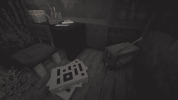 These twins are remembered less by name than by their presence. Accounts describe them as inseparable, more often than not seen moving through the forest together with an uncanny familiarity, one that unsettled some of the older residents. They were known to spend long hours within the treehouse, hastily climbing into it during the late afternoon and remaining far past the point where the forest had already been consumed by the night sky. For them, the home was not a temporary or recreational means of play, but a place they turned to with routine, a space that existed outside the reach of their home lives. It's said that from the ground, their voices could sometimes be heard dancing their way down through the branches, singing louder than the birds. Conversations, laughter, the low murmur of children passing the time. However, there are occasional, albeit rare, mentions, often dismissed by those who claim the voices did not always sound like two.
Though no formal attention was ever given to this claim.
In spite of that, the laughter that danced through the trees did not last much longer, as the wind began to sing a different tune, a much darker one. The shift came gradually, and then it all came crashing down at once. Following the port incident that introduced an unusually large population of bears to the island, sightings in the Ochiba Forest skyrocketed. Something that began as distant signs, tracks pressed too deep into the soil, broken undergrowth, and a multitude of shapes and shadows moving between the trees, soon became direct encounters. The forest, which was once treated as an extension of daily life, became something that many feared.
To date, there are no official permits, no ownership claims, and no documentation that confirms who built it. The earliest references to its existence appear only through local accounts, the vast majority of which trace the treehouse back to a pair of twin boys who lived in Karakura during the years leading up to the rise in wildlife incidents following August 22nd 1963.
These twins are remembered less by name than by their presence. Accounts describe them as inseparable, more often than not seen moving through the forest together with an uncanny familiarity, one that unsettled some of the older residents. They were known to spend long hours within the treehouse, hastily climbing into it during the late afternoon and remaining far past the point where the forest had already been consumed by the night sky. For them, the home was not a temporary or recreational means of play, but a place they turned to with routine, a space that existed outside the reach of their home lives. It's said that from the ground, their voices could sometimes be heard dancing their way down through the branches, singing louder than the birds. Conversations, laughter, the low murmur of children passing the time. However, there are occasional, albeit rare, mentions, often dismissed by those who claim the voices did not always sound like two. Though no formal attention was ever given to this claim.
In spite of that, the laughter that danced through the trees did not last much longer, as the wind began to sing a different tune, a much darker one. The shift came gradually, and then it all came crashing down at once. Following the port incident that introduced an unusually large population of bears to the island, sightings in the Ochiba Forest skyrocketed. Something that began as distant signs, tracks pressed too deep into the soil, broken undergrowth, and a multitude of shapes and shadows moving between the trees, soon became direct encounters. The forest, which was once treated as an extension of daily life, became something that many feared.
The parents of Karakura began enforcing restrictions. Children started being called back home earlier than usual, and warnings were no longer mere suggestions. No, they were instructions delivered with a firmness born of fear. The Karakura Police Department made attempts to temporarily close the forest’s outer regions, though enforcement proved inconsistent at best.
The twins were among those told to stay away, and for a time they did.
How long that time lasted remains unclear. Some say days, others weeks. Yet what is consistent across all accounts is that one boy in particular resisted the change more than the other. Often being described as the one who insisted nothing had truly changed, that the forest remained what it had always been, and that the fear the parents allowed to drive their every decision was exaggerated.
Eventually, he convinced his brother to return with him.
This outing was not planned. It was not announced, and the family or neighbors noted no preparation. The boys simply went back, and just as they always had, they entered the forest together. Search efforts began when the pair failed to return. Residents, volunteers, aided by local authorities, combed through the outer and inner regions of Ochiba, calling out into a forest that at this point had already lost the life that gave it its voice. The search went on for far longer than most were comfortable with, pushing past the boundaries established in the weeks prior. The treehouse was found and remained completely intact. There were no signs of struggle within or around it that could be formally recorded. Whatever occurred during this sudden disappearance left nothing that could be easily explained or documented in clear terms.
However, only one outcome was ever confirmed: One of the twins did not survive. Details beyond this one statement were never fully released. What was seen, what was recovered, and every conclusion drawn were either withheld or lost over time. Silence from officials surrounding this incident allowed for the void of the unknown to be filled with local interpretation, and over the years, that space was filled with conflicting rumors, theories, and stories.
The fate of the surviving twin remains unknown to this day.
Some believe he left Karakura with his family shortly after, the weight of this incident being too heavy a burden to bear. Others insist that the distinction between the two boys was misreported, and that both of them had been found dead that day, this confusion likely stemming from early, disorganized communication during the search.
The twins were among those told to stay away, and for a time they did.
How long that time lasted remains unclear. Some say days, others weeks. Yet what is consistent across all accounts is that one boy in particular resisted the change more than the other. Often being described as the one who insisted nothing had truly changed, that the forest remained what it had always been, and that the fear the parents allowed to drive their every decision was exaggerated.
Eventually, he convinced his brother to return with him.
This outing was not planned. It was not announced, and the family or neighbors noted no preparation. The boys simply went back, and just as they always had, they entered the forest together. Search efforts began when the pair failed to return. Residents, volunteers, aided by local authorities, combed through the outer and inner regions of Ochiba, calling out into a forest that at this point had already lost the life that gave it its voice. The search went on for far longer than most were comfortable with, pushing past the boundaries established in the weeks prior. The treehouse was found and remained completely intact. There were no signs of struggle within or around it that could be formally recorded. Whatever occurred during this sudden disappearance left nothing that could be easily explained or documented in clear terms.
However, only one outcome was ever confirmed: One of the twins did not survive. Details beyond this one statement were never fully released. What was seen, what was recovered, and every conclusion drawn were either withheld or lost over time. Silence from officials surrounding this incident allowed for the void of the unknown to be filled with local interpretation, and over the years, that space was filled with conflicting rumors, theories, and stories.
The fate of the surviving twin remains unknown to this day.
Some believe he left Karakura with his family shortly after, the weight of this incident being too heavy a burden to bear. Others insist that the distinction between the two boys was misreported, and that both of them had been found dead that day, this confusion likely stemming from early, disorganized communication during the search.

One more belief remains, a much quieter rumor, one that isn’t often spoken out right, but implied in the very same way stories are told. This version suggests that the surviving twin did not leave the forest immediately. He returned to the forest in the many days that followed. That whatever had happened did not end for him when the search did. However, there are no records to confirm this. In the years following the incident, reports began to surface. They were infrequent at first, easy to dismiss, and often attributed to imagination or suggestion. Individuals passing through the outer Ochiba region reported seeing a figure within the treehouse itself. The descriptions of what was being seen remained consistent. A young boy, positioned in the doorway or framed by the structure's square openings, faces outward. The figure was always still, never moving, never gesturing, and never attempting to communicate. Just a present. Over time, additional sightings were reported deeper within the forest. A child-sized figure visible only for a moment before slipping out of sight. Not running, or reacting in a sense of panic, simply stepping back until the line of sight was broken. Those who reported these encounters often described the same sequence. The sensation of being watched before seeing anything.
While the Ochiba forest continues to sustain the wildlife within, including the bear population introduced in the decades prior, the area around the treehouse appears unusually still, as though frozen in time. Animals are rarely seen near the tree in which it is built, and those that pass through the area do not make any attempt to linger. The structure itself shows signs of age, but not failure. Wood that should have rotted remains intact. Support that should’ve long been weakened continues to hold. It leans, ever so slightly, as if that were its only acknowledgement to the passage of time, but never enough to suggest its collapse.
Those who remain beneath it for extended periods often report a gradual increase in discomfort. Not immediate fear, but a growing certainty that their presence is being registered from above. Even in the absence of any visible figure, the sensation persists long enough that staying feels like a mistake. The treehouse remains exactly where it was built, unaltered and undisturbed. Though not officially designated as a restricted area. The Karakuran government has made no recent attempt to remove or examine this construct. Perhaps it's an oversight, or a lack of necessity, or maybe an intentional avoidance.
Among the locals, the understanding is simple. The figure seen within the treehouse does not leave its vicinity.
It does not call out.
It does not follow.
It only watches.
And those who have seen it arrive at the same conclusion. That it had been there for some time, before they ever thought to look.
While the Ochiba forest continues to sustain the wildlife within, including the bear population introduced in the decades prior, the area around the treehouse appears unusually still, as though frozen in time. Animals are rarely seen near the tree in which it is built, and those that pass through the area do not make any attempt to linger. The structure itself shows signs of age, but not failure. Wood that should have rotted remains intact. Support that should’ve long been weakened continues to hold. It leans, ever so slightly, as if that were its only acknowledgement to the passage of time, but never enough to suggest its collapse.
Those who remain beneath it for extended periods often report a gradual increase in discomfort. Not immediate fear, but a growing certainty that their presence is being registered from above. Even in the absence of any visible figure, the sensation persists long enough that staying feels like a mistake. The treehouse remains exactly where it was built, unaltered and undisturbed. Though not officially designated as a restricted area. The Karakuran government has made no recent attempt to remove or examine this construct. Perhaps it's an oversight, or a lack of necessity, or maybe an intentional avoidance.
Among the locals, the understanding is simple. The figure seen within the treehouse does not leave its vicinity.
It does not call out.
It does not follow.
It only watches.
And those who have seen it arrive at the same conclusion. That it had been there for some time, before they ever thought to look.
Last edited: