


────✎ᝰ.──── OOCLY INFORMATION ────✎ᝰ.────
⋆
 ︎˖ What's your Minecraft Username?:
furrypawpou
⋆
︎˖ What's your Discord username?: brepaopu
⋆
︎˖ What's your Time Zone?: PST (UTC-8)
⋆
︎˖ Provide any link(s) to previous applications:Reporter Application: Here! [ACCEPTED]
Doctor Application: Here! [ACCEPTED]
⋆
︎˖ What are your current roles on the server?:List your current roles on the server: (brepaopu)
[Reporter] Lysander Vale
[Grade-12] Riku Diaz Kamishiro
[Grade-12] Breanna Amira
[Grade-12] Kaizen Akamura
[Grade-12] Sierra Sasaki
[Grade-12] Elaria Veyne Armani
[Grade-12] Evander F. Kyouketsu
⋆
︎˖ List your current roles on the server: (brechocobo)[Doctor] Shizuku M. Yozora
[Grade-12] Kaiden Koudu
⋆
︎˖ List your current roles on the server: (furrypawpou)[—] Eleanor Victoria Hayes
⋆
︎˖ Why are Teachers so important to SchoolRP?:I feel like teachers are pretty crucial in making SRP feel more like an actual school environment. They give us something to look forward to and do outside of our daily role playing. Without teachers open to hosting classes, holding activities, and putting in a bit of effort to their lessons, school is just pretty quiet and not too enjoyable (or at least I feel that I don't get the most from the experience). They also add in a few different opportunities for students to interact with people they wouldn't normally role play with, whether through assignments, school related events, school wide things, or just a regular interaction between students and the teacher. I also feel like teachers give us more opportunities to develop our characters and have some memorable experiences. Without teachers, it wouldn't really be a school at all.
⋆
︎˖ Do you acknowledge that if you are inactive you may lose your role?: Yes, I understand that being inactive, failing to complete the required amount of classes, will result in my removal.
⋆
︎˖ Do you agree to undergo teacher training if your application is successful?: YesYes. I know that I will be expected to be present if I am on the internet during training sessions. I also know that if I continually fail to attend without reason I will be dealt with through punishment or other means.
⋆
︎˖ What is your motivation for becoming a Teacher?: My biggest reason for wanting to be a teacher is because I want to be more engaged with the school, and to give something to the SRP community. I've always been interested in having a position where I can set up activities and have interactions with people, and provide a fun experience for others. I feel like teaching would be a good way to go beyond the roles I have had in the past, with more responsibility and consistency.
I like the idea that I'd be applying to teach History, I'd really like to be fun and not expect the students to listen to the whole lecture in silence and be asked to answer a few questions. I'd love to have classes with debates, investigations as a group, trivia, activities based on Karakura and the history of the school. I believe those types of classes would give the students more space to interact and create their roleplay.
Another reason that I am interested is because I like the creative process of coming up with new ideas and sharing them with other people. I wouldn't think every class would be successful, but I would prepare in advance, observe the different ways I could do my lesson better and take advice from students. In general, I think I want to be a teacher because I really think I would enjoy it and I could make the school a more lively, friendly and fun place.

⋆
︎˖ In-Character Section⋆︎˖ What's your character's full name?:
Eleanor would straighten the collar of her blouse before stepping forward, offering a polite smile as she extended her hand in greeting. “Good afternoon! My name is Eleanor Victoria Hayes. It’s a pleasure to meet you. I look forward to getting to know everyone and hopefully making a positive impression.”
⋆︎˖ What is your character's age?:
She would briefly glance down at her wristwatch before returning her attention to the person addressing her, letting out a small chuckle. “I’m twenty-nine years old! Still young enough to keep up with everyone, but old enough to have a few interesting stories of my own.”
⋆︎˖ What is your preferred subject to teach?:
Eleanor’s expression would brighten slightly at the question. She would reach into her handbag, retrieving a small notebook filled with historical notes and bookmarked pages. “History, without a doubt! I’d particularly enjoy teaching both World History and Karukura's History. There’s something fascinating about understanding the events, individuals, and decisions that shaped the world we live in today. I’d love to introduce students to different historical periods through discussions, debates, and interactive activities. After all, history is much more interesting when you get to experience it rather than simply read about it!”
︎˖ What's your character's full name?: Eleanor would straighten the collar of her blouse before stepping forward, offering a polite smile as she extended her hand in greeting. “Good afternoon! My name is Eleanor Victoria Hayes. It’s a pleasure to meet you. I look forward to getting to know everyone and hopefully making a positive impression.”
⋆
︎˖ What is your character's age?: She would briefly glance down at her wristwatch before returning her attention to the person addressing her, letting out a small chuckle. “I’m twenty-nine years old! Still young enough to keep up with everyone, but old enough to have a few interesting stories of my own.”
⋆
︎˖ What is your preferred subject to teach?: Eleanor’s expression would brighten slightly at the question. She would reach into her handbag, retrieving a small notebook filled with historical notes and bookmarked pages. “History, without a doubt! I’d particularly enjoy teaching both World History and Karukura's History. There’s something fascinating about understanding the events, individuals, and decisions that shaped the world we live in today. I’d love to introduce students to different historical periods through discussions, debates, and interactive activities. After all, history is much more interesting when you get to experience it rather than simply read about it!”
⋆
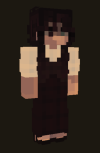
︎˖ Describe your character:Eleanor is a 29-year-old woman with long, dark brown hair that falls into two loose braids framing her face. She has muted green eyes, a warm complexion, and soft facial features that give her an approachable appearance. Her clothing style is modest, professional, and elegant, usually consisting of neutral-colored blouses, cardigans, trousers, and long skirts.
Eleanor also has vitiligo, which appears as naturally occurring patches of lighter pigmentation across areas of her skin, including her arms and upper torso. These patches may become more noticeable or appear in additional areas over time.
⋆
︎˖ Personality:Eleanor is a patient, observant, and approachable individual who genuinely enjoys helping others learn. Although she can be somewhat reserved when first meeting people, she becomes much more expressive once she feels comfortable. She has a warm sense of humor and enjoys making her classroom feel welcoming without compromising her professionalism.
She is particularly passionate about history and can occasionally find herself rambling when discussing a historical event she finds interesting. She values curiosity, respectful discussions, and independent thinking. While she is understanding toward students who struggle, she also believes in maintaining classroom expectations and treating everyone fairly.
⋆
︎˖ BackgroundEleanor developed an interest in history at a young age. She often found herself reading historical biographies, watching documentaries, and visiting museums whenever she had the opportunity. What initially began as a personal interest gradually became something she wanted to pursue professionally.
After completing her education, she earned a Bachelor’s Degree in History before continuing her studies and obtaining a Master’s Degree in Education. Throughout her professional experience, she discovered that she particularly enjoyed helping students understand the connections between historical events and the world around them.
Eleanor believes history should be more than memorizing names and dates. She wants students to understand the people, decisions, conflicts, and circumstances that shaped different periods. After gaining experience in education, she hopes to continue developing her teaching abilities and create a classroom where students feel comfortable participating, asking questions, and exploring new perspectives.
⋆
︎˖ Hobbies and Interests⋆
︎˖ Visiting museums and historical landmarks.⋆
︎˖ Reading historical biographies and literature.⋆
︎˖ Exploring antique bookstores and collecting old books.⋆
︎˖ Traveling and photographing interesting architecture.⋆
︎˖ Collecting postcards and small souvenirs from different places.⋆
︎˖ Enjoying coffee and spending quiet afternoons reading.⋆
︎˖ Future GoalsEleanor hopes to become a respected and dependable educator within the Karakura community. She wants to develop engaging history lessons, encourage students to become more curious about the past, and create a classroom environment where everyone feels comfortable participating.
She would also like to visit more historical landmarks and continue expanding her knowledge so she can bring new information and perspectives into her lessons.

⋆
︎˖ Roleplay Scenarios ⋆︎˖ A student in class is struggling to understand the content, what would your character do?:
Eleanor pauses her explanation after noticing a student repeatedly erasing their answers and staring down at their worksheet. She places the chalk on the tray before approaching their desk with a reassuring smile. “Having a little trouble with this one?”
She pulls a neighboring chair closer and sits beside the student, briefly examining their work. After retrieving her notebook, she writes down a simpler explanation of the material. “Let’s try looking at this from a different perspective. Sometimes breaking things into smaller sections makes them much easier to understand.” She carefully explains the material using a historical example, asking the student questions along the way rather than immediately giving them the answer.
“Alright, now that we’ve gone through that together, would you like to give the next question a try?” Eleanor patiently waits for the student to work through the question, offering guidance when necessary. “See? You’re getting there! Never hesitate to ask questions. That’s what I’m here for.”
She gives the student an encouraging smile before returning to the front of the classroom, making a mental note to check on their progress during the next lesson.
⋆︎˖ A student is continuously being disruptive in class, talking out of turn, and making jokes with classmates. What would your character do?:
Eleanor pauses while writing on the chalkboard after noticing laughter and conversations coming from the back of the classroom. She turns around, placing the chalk down before addressing the students. “Let’s keep our conversations for after class, please. I’d appreciate everyone’s attention.” She gives the class an opportunity to correct their behavior before continuing the lesson. However, if the interruptions persist, she approaches the disruptive student’s desk and rests one hand against the neighboring table.
“Is there something you’d like to share with the entire class, or can we save the conversation for later?” She allows the student an opportunity to respond before continuing in a slightly firmer tone. “I don’t mind a little humor, but there’s a time and place for everything. Your classmates deserve the opportunity to learn without being interrupted.”
If the behavior continues, Eleanor asks the student to remain after the bell. Once the classroom has emptied, she pulls up a chair and sits across from them, placing her notebook on the desk. “I wanted to have a quick conversation about what happened today. Is there something bothering you, or were you simply having a difficult time staying focused?” She listens carefully to the student’s response, acknowledging their concerns before explaining her expectations. “I understand that not every lesson will be interesting, but I do expect you to respect the people around you. I’d rather resolve this through a conversation than have to take further action.” She gives the student an opportunity to respond and explains that repeated disruptions may need to be documented and handled through the school’s disciplinary procedures.
⋆︎˖ Provide at least 2 interactive class ideas related to your preferred subject:
⋆︎˖ 1. History of Karakura - Classroom Investigation
Eleanor walks in the classroom with her old leather folder that holds all of her old pictures, clippings, records, and notes in it. She sets everything down on her desk and writes THE HISTORY OF KARAKURA on the board. "Good morning, everyone! I brought you all here today to look into the history of this town we all know and love. How much do you really know about Karakura's history? Let's see if you know as much as you think you do!" She starts with a brief history of Karakura, detailing the origins of the city in 1946, the Otori family, and other notable items. She then goes on to say that the class will be working on a history-related task.
Eleanor splits the pupils into small teams and distributes to each a selection of clues which may include photographs, newspaper clippings, letters, and records. But the clues are jumbled and some records have gaps in them. "To start, try to work out what you're looking at! You'll have to identify the incidents, put them in chronological order and see how they relate. And here's the trick, none of the groups has all of the details, so you'll need to talk with the other teams to piece the story together." She encourages the students to circulate the classroom, share information, question other groups and compare their evidence. Eleanor wanders between the desks, providing the odd clue.
"Great theory! But does your evidence justify that conclusion? Maybe someone else has a paper that might help you." After this portion of the investigation, Eleanor has students work as a class to build a large timeline in the front of the room. Each group shares its investigation, reasoning, and responds to student questions. Finally, she wraps up with a short class discussion in which she asks the students to imagine how Karakura might be different now, if some of the events she discussed had not happened. "Here's a question for all of you now: If you could change one event in Karakura's history, what would it be and how would the town be different now?"
She also lets students argue their responses before finalising the lesson. "Great job, everyone! Today, you've learned more than a set of facts. You've explored the past, looked critically at your sources, and collaborated to discover the influence of history on the world we live in."
Objective: Promote teamwork, communication, historical investigation, critical thinking, and problem-solving skills; while gaining the students' orientation to Karakura's already existing lore.
⋆︎˖ 2. Karakura High's Forgotten Past - The School Archives
Eleanor walks in the classroom carrying a dirty cardboard box marked "KARAKURA HIGH SCHOOL ARCHIVES". She gently sets it down on her desk before writing "WHAT HAPPENED HERE?" on the chalkboard. "Good afternoon everyone! I have a question. How many of you actually know about the history of the school you go to every day?" She waits for students to respond before she opens the box. Inside the box are photographs of classmates, school newspapers, school club records and more.
"Hard to imagine, but this school has an interesting past. Now it's your turn to put on your historian hats, and investigative reporter hats, as we find out some of it." Eleanor groups the students and assigns each group a research project on a specific topic. Topics may include the founding of the school in 1946, past school events, other former clubs, the football team, or highlights about school students and faculty. Sure enough, the groups each have different documents, but Eleanor says we are not going to have the groups present today. Instead, they'll be designing their own historical interactive exhibits.
"This is how I'd like you to do it: decide on how you want to display your results. You might do a newspaper, compile a timeline, assemble a museum exhibit, or even have a brief interview with someone playing the role of a student or staff member in history. Be inventive!" Eleanor allows time for the pupils to prepare the displays. She advises them to split up responsibilities and cooperate. When they finish, she guides them in transforming the classroom into a miniature school history museum. 'Okay, historians! Welcome to the Karakura High Museum. One at a time, each group will show off their exhibit and the other groups will look around and ask questions.'
Students are allowed to move about, look at the displays, do mock interviews, and do a little worksheet with questions about the school's history. Eleanor moves from one display to another, taking part in the conversations, and sometimes asking the students to tell her more. "Be sure to learn something new before you go! I may ask you about it later on." To add some excitement, Eleanor wraps up with a brief historical trivia game. She recites the questions over a microphone that she has hooked to a speaker, so students can listen and answer on their own or in teams for points.
"Who has been paying attention! Can you remember the most about our school's history?" Once the winning team is announced, she brings her students together for one last talk about how the school's history relates to its current work. "Remember, you're not just coming to school here. You're joining the history of this school, and maybe someday somebody will be putting an exhibit together about what you did here."
Goals: Promotes the art of school involvement and reporting. Promotes team work, communication, school involvement, school spirit, public speaking and creativity. Use this to have the class learn about the history of Karakura High.
MORE Interactive History Class Ideas
1. Historical Time Travel – Students are assigned different historical periods and act out what everyday life was like during that time.
2. Build Your Own Civilization – Students work in groups to create their own civilization, including its government, laws, traditions, economy, and culture.
3. Historical Newsroom – Students become reporters covering major historical events as if they were happening live, complete with interviews and breaking news reports.
4. History Auction – Students receive pretend money and bid on historical inventions, artifacts, and discoveries while explaining their historical importance.
5. Timeline Challenge – Students compete in teams to put historical events, important figures, and discoveries in the correct chronological order.
6. Escape the History Classroom – Students solve history-related riddles, decode messages, and answer questions to unlock clues and complete an escape-room challenge.
7. Design a Historical Museum – Students create their own museum exhibits featuring historical artifacts, descriptions, photographs, and interesting facts.
8. Historical Debate Club – Students are assigned opposing viewpoints on historical decisions and must defend their positions using evidence.
9. Invention Convention – Students research important historical inventions, explain how they changed society, and pitch their own improved versions.
10. A Letter Through Time – Students write a letter from the perspective of someone living during a historical event, describing their experiences, surroundings, and opinions.
11. Map the World – Students work together to recreate historical maps, identify changing borders, and explain how wars, exploration, and political decisions shaped the world.
12. Who Am I? Historical Edition – Students receive clues about a historical figure and must figure out their identity by asking questions and using historical knowledge.
⋆︎˖ Have you read and understand the Teacher Application Guidance thread?
Yes! I understand the Application Guidance Thread!
︎˖ A student in class is struggling to understand the content, what would your character do?:Eleanor pauses her explanation after noticing a student repeatedly erasing their answers and staring down at their worksheet. She places the chalk on the tray before approaching their desk with a reassuring smile. “Having a little trouble with this one?”
She pulls a neighboring chair closer and sits beside the student, briefly examining their work. After retrieving her notebook, she writes down a simpler explanation of the material. “Let’s try looking at this from a different perspective. Sometimes breaking things into smaller sections makes them much easier to understand.” She carefully explains the material using a historical example, asking the student questions along the way rather than immediately giving them the answer.
“Alright, now that we’ve gone through that together, would you like to give the next question a try?” Eleanor patiently waits for the student to work through the question, offering guidance when necessary. “See? You’re getting there! Never hesitate to ask questions. That’s what I’m here for.”
She gives the student an encouraging smile before returning to the front of the classroom, making a mental note to check on their progress during the next lesson.
⋆
︎˖ A student is continuously being disruptive in class, talking out of turn, and making jokes with classmates. What would your character do?:Eleanor pauses while writing on the chalkboard after noticing laughter and conversations coming from the back of the classroom. She turns around, placing the chalk down before addressing the students. “Let’s keep our conversations for after class, please. I’d appreciate everyone’s attention.” She gives the class an opportunity to correct their behavior before continuing the lesson. However, if the interruptions persist, she approaches the disruptive student’s desk and rests one hand against the neighboring table.
“Is there something you’d like to share with the entire class, or can we save the conversation for later?” She allows the student an opportunity to respond before continuing in a slightly firmer tone. “I don’t mind a little humor, but there’s a time and place for everything. Your classmates deserve the opportunity to learn without being interrupted.”
If the behavior continues, Eleanor asks the student to remain after the bell. Once the classroom has emptied, she pulls up a chair and sits across from them, placing her notebook on the desk. “I wanted to have a quick conversation about what happened today. Is there something bothering you, or were you simply having a difficult time staying focused?” She listens carefully to the student’s response, acknowledging their concerns before explaining her expectations. “I understand that not every lesson will be interesting, but I do expect you to respect the people around you. I’d rather resolve this through a conversation than have to take further action.” She gives the student an opportunity to respond and explains that repeated disruptions may need to be documented and handled through the school’s disciplinary procedures.
⋆
︎˖ Provide at least 2 interactive class ideas related to your preferred subject:⋆
︎˖ 1. History of Karakura - Classroom InvestigationEleanor walks in the classroom with her old leather folder that holds all of her old pictures, clippings, records, and notes in it. She sets everything down on her desk and writes THE HISTORY OF KARAKURA on the board. "Good morning, everyone! I brought you all here today to look into the history of this town we all know and love. How much do you really know about Karakura's history? Let's see if you know as much as you think you do!" She starts with a brief history of Karakura, detailing the origins of the city in 1946, the Otori family, and other notable items. She then goes on to say that the class will be working on a history-related task.
Eleanor splits the pupils into small teams and distributes to each a selection of clues which may include photographs, newspaper clippings, letters, and records. But the clues are jumbled and some records have gaps in them. "To start, try to work out what you're looking at! You'll have to identify the incidents, put them in chronological order and see how they relate. And here's the trick, none of the groups has all of the details, so you'll need to talk with the other teams to piece the story together." She encourages the students to circulate the classroom, share information, question other groups and compare their evidence. Eleanor wanders between the desks, providing the odd clue.
"Great theory! But does your evidence justify that conclusion? Maybe someone else has a paper that might help you." After this portion of the investigation, Eleanor has students work as a class to build a large timeline in the front of the room. Each group shares its investigation, reasoning, and responds to student questions. Finally, she wraps up with a short class discussion in which she asks the students to imagine how Karakura might be different now, if some of the events she discussed had not happened. "Here's a question for all of you now: If you could change one event in Karakura's history, what would it be and how would the town be different now?"
She also lets students argue their responses before finalising the lesson. "Great job, everyone! Today, you've learned more than a set of facts. You've explored the past, looked critically at your sources, and collaborated to discover the influence of history on the world we live in."
Objective: Promote teamwork, communication, historical investigation, critical thinking, and problem-solving skills; while gaining the students' orientation to Karakura's already existing lore.
⋆
︎˖ 2. Karakura High's Forgotten Past - The School ArchivesEleanor walks in the classroom carrying a dirty cardboard box marked "KARAKURA HIGH SCHOOL ARCHIVES". She gently sets it down on her desk before writing "WHAT HAPPENED HERE?" on the chalkboard. "Good afternoon everyone! I have a question. How many of you actually know about the history of the school you go to every day?" She waits for students to respond before she opens the box. Inside the box are photographs of classmates, school newspapers, school club records and more.
"Hard to imagine, but this school has an interesting past. Now it's your turn to put on your historian hats, and investigative reporter hats, as we find out some of it." Eleanor groups the students and assigns each group a research project on a specific topic. Topics may include the founding of the school in 1946, past school events, other former clubs, the football team, or highlights about school students and faculty. Sure enough, the groups each have different documents, but Eleanor says we are not going to have the groups present today. Instead, they'll be designing their own historical interactive exhibits.
"This is how I'd like you to do it: decide on how you want to display your results. You might do a newspaper, compile a timeline, assemble a museum exhibit, or even have a brief interview with someone playing the role of a student or staff member in history. Be inventive!" Eleanor allows time for the pupils to prepare the displays. She advises them to split up responsibilities and cooperate. When they finish, she guides them in transforming the classroom into a miniature school history museum. 'Okay, historians! Welcome to the Karakura High Museum. One at a time, each group will show off their exhibit and the other groups will look around and ask questions.'
Students are allowed to move about, look at the displays, do mock interviews, and do a little worksheet with questions about the school's history. Eleanor moves from one display to another, taking part in the conversations, and sometimes asking the students to tell her more. "Be sure to learn something new before you go! I may ask you about it later on." To add some excitement, Eleanor wraps up with a brief historical trivia game. She recites the questions over a microphone that she has hooked to a speaker, so students can listen and answer on their own or in teams for points.
"Who has been paying attention! Can you remember the most about our school's history?" Once the winning team is announced, she brings her students together for one last talk about how the school's history relates to its current work. "Remember, you're not just coming to school here. You're joining the history of this school, and maybe someday somebody will be putting an exhibit together about what you did here."
Goals: Promotes the art of school involvement and reporting. Promotes team work, communication, school involvement, school spirit, public speaking and creativity. Use this to have the class learn about the history of Karakura High.
MORE Interactive History Class Ideas
1. Historical Time Travel – Students are assigned different historical periods and act out what everyday life was like during that time.
2. Build Your Own Civilization – Students work in groups to create their own civilization, including its government, laws, traditions, economy, and culture.
3. Historical Newsroom – Students become reporters covering major historical events as if they were happening live, complete with interviews and breaking news reports.
4. History Auction – Students receive pretend money and bid on historical inventions, artifacts, and discoveries while explaining their historical importance.
5. Timeline Challenge – Students compete in teams to put historical events, important figures, and discoveries in the correct chronological order.
6. Escape the History Classroom – Students solve history-related riddles, decode messages, and answer questions to unlock clues and complete an escape-room challenge.
7. Design a Historical Museum – Students create their own museum exhibits featuring historical artifacts, descriptions, photographs, and interesting facts.
8. Historical Debate Club – Students are assigned opposing viewpoints on historical decisions and must defend their positions using evidence.
9. Invention Convention – Students research important historical inventions, explain how they changed society, and pitch their own improved versions.
10. A Letter Through Time – Students write a letter from the perspective of someone living during a historical event, describing their experiences, surroundings, and opinions.
11. Map the World – Students work together to recreate historical maps, identify changing borders, and explain how wars, exploration, and political decisions shaped the world.
12. Who Am I? Historical Edition – Students receive clues about a historical figure and must figure out their identity by asking questions and using historical knowledge.
⋆
︎˖ Have you read and understand the Teacher Application Guidance thread? Yes! I understand the Application Guidance Thread!
Attachments

Last edited: