
If you know where to look, Karakura holds a vast network of waterscapes. Some known, some not, others merely passed by without a second thought. This report will focus on such areas, those specifically highlighting Karakura's inland waters both manmade and naturally occurring, with some landing somewhere between.
Before moving forward it's important we understand exactly what we’ll be discussing. Due to the vastness this report will not focus on waterways closely connected or part of Karakura bay. Instead, focusing on those found throughout the city, from regions within Ochiba Forest to the city's various maintained Gardens and parks.
Parks, Ponds and GardensStarting off strong we’ll take a brief look at the networks of waterways that may go overlooked by residents. With some prompting a simple glance in passing while others naturally hold a more notable amount of esteem. Regardless of public perception, this section includes various historic sights that could warrant a report of their own. Meaning, a deep dive will not be executed but it is encouraged to further research certain locations listed, especially those with such deep rooted ties to Karakura's history.
Jinsei Zen Garden
Located in Hokuseibu district along Dengen road, the Jinsei Zen Garden is one such historic site in Karakura. Tracing its roots back hundreds of years the Garden has seen various conflicts, wars, as well as openings and closings of its doors. While being left abandoned for some time the Zen Garden seen today does not reflect this, flourishing with life and scenery.
The Zen Garden would be marked on any tourist's itinerary for its sights. While not hidden in the slights, the Zen Garden flaunts its water, holding both an aesthetic and practical utility. The water stems from runoff from the Karakura Mountain Range, with two notable streams of water descending into the central pond and channels found at the location.
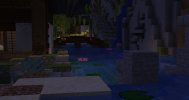 |  |
Two notable regions of water can be found at the location, the central pond found at the ridge of the mountain range and what seem to be manmade channels sprawling across the garden. The central pond is large and exotic, creating a beautiful presence for those visiting. The channels, while also a sight to see, in part hold a practical element. With various plant life sprawled across the garden small fields of crops run along the channels, supposedly irrigating the plant life in full effect.
While not visualized due to its rare nature, the Zen Gardens eastern statue, the Weeping Maiden, displays an eccentric act of nature during rainy periods. Collections of rainwater seem to consistently accumulate and pour off the statue in a manner mimicking tears, hence the statue's name.
Tagahashi Pathway Park
The Tagahashi parks are two equal splits present on either end of the central Plaza. Both featuring vibrant plantlife and water exhibits. With the northern most having a meager stream beneath a vibrant willow tree. The southern half on the other hand sits a large pond, in which a large traditional arch bridge allows for passage through.
 |
Karakura Academy, Rear Ponds.
Near the rear exit of Karakura Academies campus lies a string of ponds, cemented between large boulders and massive curving trees. These ponds sit still with no noticeable running streams or currents. As well, the general plant life surrounding the ponds seems to be well kept, attributed to the custodians or caretakers work to maintain the campuses modernity.
Akihito & Saiky Estates
Sitting within, between and around the Akihito & Daily estates is a notable set of waterways adding to the vibrant plantlife found at the traditional estates. Starting outside, four medium to small sized ponds sit bluntly in front of the main entrances. While within is another story.
The Akihito estate, due to its relatively public nature, holds the most documentation. With waterways connecting edge to edge within the estate. Bridges have been set up to allow for more accessible travel throughout the estate while taking in the natural beauty of the location. However, none of this can compare to the large Torii gate that sits on the southern most edge of the Akihito estate. While blending in well with the traditional architecture found there the gate itself stands roughly 14 meters tall, cemented into the pond itself.
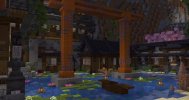 |
This large structure isn't the end of the network however, passing through the southern most edge of the Akihito estate the stream continues onward merging with a water also present at the Saiky estate. The waterways present at both estates undoubtedly share an ecosystem with each other.
Shicho and Nakinawa Parks
The Shicho, north of Plaza, and the Nakinawa, south of Plaza, are parks stationed remotely close to the heart of Karakura City. Each park is surrounded by various large trees on its edges, providing shade for those walking by and dampens the sound of vehicles for those visiting.
Shicho Park is known for its large Willow tree and extravagant events that are hosted inside or around its borders. Within this park however are two ponds on the northern most edge, with a smaller quaint one sitting reserved in one corner while the larger sits across from it. Both featuring sandy edges and blooming plantlife. While not rivaling the blossoming nature of Ochiba Forest, it is a considerable find within the city limits.
Nakinawa Park however is much more reserved. With more opportunities present at the park, a basketball court, playground and various picnicking areas the park does not get as much traction compared to the events hosted at Shicho. Perhaps due to the large open center allowing for the beaming sun to enter. The park however does feature one small pond on its southern most corner along Karakura Avenue.
Karakura Bay, Hotsprings
Sitting at the east-most point of Karakura Bay are smaller and relatively remote hot springs. While less visited and smaller than the Onsen at the Shinsau Seinaru Monastery, which we’ll discuss shortly, the hot springs are still an interesting find for those that stumble upon them. Having been made more accessible due to recent renovations at Karakura Beach the site will undoubtedly receive more visitors as word spreads. The hot springs connect closely with streams surrounding it, of which the network seems to pour into the Ocean via small waterfalls across the bay.
Sakura Water Park
While a completely manmade and activity maintained fixture this location would be regrettable not to mention. Having undergone recent developments the Sakura Water Park sits on the Karakura beach offering additional relief to residents visiting the beach. Within the park sits the newly developed Kaigan resort, a further fixture popping up from the recent renovations.
Shotengai
The center of Karakuras business and commerce the district gets a notable amount of foot traffic, often by those visiting the plethora of shops and restaurants. With all this attention its no surprise various parks and gardens have popped up overtime, offering yet another attraction for visitors.
Shotengai, Northern Nature Park
Hidden behind the central roads of the Shotengai and parked snugly behind a large parking garage and Complex V is a fairly small walkable park. Away from the main attractions of the shopping district the park does not lead anywhere particular but simply acts as a desolate location with a marsh of plantlife, ponds, rivers, and an abandoned mine this reporter decided to avoid for the time being.
Once passing a large Torii gate marking the entrance a small pond can be found on the western side of the park while on the eastern side a pond fed by a notable waterfall running off the mountain range appears.
Shotengai, The Garden of Duality
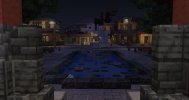
Located behind Pinkumo and in front of the La Casa Nostra location sits a central park, referred to as the Garden of Duality by past writings. The garden and its substantial network of waterways is an apparent man-made system, flaunting the duality of Karakuran artisans. Stated due to the gardens' various structures, with two large statues of ancient water dragons present. Along this display of craftsmanship is the garden's central water fountain, of which shimmers can be from the pits of the fountain. Perhaps from coins thrown by passerbies?
 |
Shotengai East Park, Estate Street
Marking the border between the Shotengai and the closeby Ochiba forest lies a small park. With various plantlife, insects, and walkways the location is a relatively unknown one in Karakura but still presents a natural beauty while surrounded by modern infrastructure. Along this park flows a small waterway with paths following its edge. Whether this flow adapted to the modern infrastructure or if the paths themselves were etched to follow it is one question lost to history.
The waterways present at this park flow far out from its initial reach. Flowing all the way along the bike path leading to the estates parallel to the Shotengai. The waterway irrigates various life along this path, as well, potentially flowing off into a marsh located behind the estates. However, this can not be verified for certain, but with the marsh's relative lower verticality and sewer runoff it may be assumed.
Ochiba Forest
Fishing Pond and Streams
A central location in Ochiba forest brings a plethora of visitors is the fishing pond. While seeming rudimentary the fishing pond exists from a large network of streams and mountain runoff. You could simply appreciate the pond as is, however by going upstream, and continuing to read this report, we can see how this pond connects to virtually all other water exhibits present in the forest.
The pond itself holds a plethora of plantlife and wildlife, as the name states various species of fish live and thrive within the pond. Repopulating quickly enough to serve the large market that is Karakuras fishers. This pond, like the rest of Ochiba forest, is shaded by the medium sized trees that surround it.
Upstream, the pond is fed into a small river that is fed by mountain runoff. This stream is present at all edges of the forest and as stated before connects virtually all waterways in this region, that being all except the Karakura Wildlife Sanctuary pond. Of which we’ll discuss next.
Karakura Wildlife Sanctuary Pond
The Karakura Wildlife Sanctuary is a location deep in the Ochiba forest, and while trails will take you there its done so with warnings of wildlife that are prominent in the area, if not already obvious by the markings present on trees in the region. However, besides the potential danger there sits a large pond, like all other waterways in the forest this one is also filled to the brim with plantlife. This pond does stand in a league of its own as discussed before, lacking a direct line of connection with all the other ponds and streams present in the forest.
Ochiba Forest, Wooded Marsh
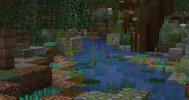
Sitting behind the Shotengai estates lies a wooded marsh where various streams connect, filling in the lowland found in the region. This believed to be marsh sits between the border of the estates and the trail to the Shinsei Seinaur Monastery. Water feeds into this region from across the forest, being the end destination of streams from what can be perceived. Runoff from the nearby mountain range appears in this location, as well, a Sewer entrance can be seen. While opening questions about the safety of the water may simply be the entrance from the waterway mentioned in the Eastern Shotengai park mentioned briefly earlier in this article.
 |
Shinsei Seinaru Monastery
The Monastery is home to a large network of waterways with many stemming from runoff attributed to the Karakura Mountain Range. This doesn't stop notable portions of it to be maintained in part by man while others simply act as a force of nature.
Onsen
The Onsen are present alongside the main path to the Shinsei Seinaru Monastery and unlike the ones present at Karakura Bay are well maintained with infrastructure present at all points, likely due to the redevelopments that had occurred in years past. This area is publicly available for all citizens, except those on the Shrines blacklist, assumingly. Within the Onsen itself plant life is sparse, likely due to its maintenance, however a large Cherry blossom tree does seem to stand tall with petals falling gently streams present above the Onsen.
Monastery Pond
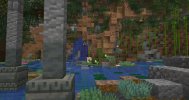
Along the main entrance to the Shrine resides a large pond with an island and tree centered within it. This pond, like others, is connected to many of the waterways present in Ochiba forest, however its roots seem to lie in a waterfall pouring down from the Karakura Mountain range. Ornaments and lanterns are hung upon the center tree and stepping stones allow for travel to it. The pond is unquestionable in the Shrines purview as a Torii gate stands above an existing stream of it, and the ornaments mentioned seem traditional in nature.
 |
Monastery Springs
Natural springs sprinkle down the mountain range as you make your trek up to the monastery and are present throughout the Shrines property. Holding a spiritual and practical benefit to the location. Before entering across the main hanging brdige the springs have been partially manipulated by man to create a traditional Temizuya, allowing for cleansing before entrance to the shrine.
Once entering the Shrine the springs grow in size, acting as wings to the main stairway to the Shrines blessing room the springs sit on either side. On the rightmost side Koi can be seen swimming. The waterways present at the shrine undoubtedly plays a part in the natural beauty of the location.
 |
Waterways are present across Karakura, some alone in parks, others being a part of a large interconnected network such as those found in Ochiba Forest. These waters allow for the flourishing of life within the bustling city, and as the city continues to develop it can be hoped that these exhibits continue to stand the test of time.
- Geun Maeng
Attachments
Last edited:

