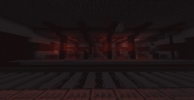
Kiken Station
written by @shark
proofread by @RexLobo & @ConeKicker.pt2
This document can be taken icly!
The deadline for the train station was September 1946, as the school would open its gates for the first time in late Autumn. Countless hours stretched into long shifts during the warm early mornings of May to the hot, docile afternoons of the summer. Fourteen-hour work days, building a blueprint with plans to unravel in months. ‘Keikan,’ a similar-sounding word the town used for how long it took for the structure to have a use; A name that was dedicated to the meaning of ‘experience.’
The Kiken mappings ran through an already-built sewer line. The workers on site built a tunnel through, placing rails on the freshly dried coarse concrete. The main goal of this project was to connect the lines running through Kagoshima and Shinboshi. The original lining consisted of twists and curves around the perimeter of the station. A path that reworked the entire system, allowing for it to send students directly to school, rather than a lengthy walk from the dormitories. And with the rework came different entrances into the sewers on the platform's side.
The station gained attention the day it opened; Enough time for the town to grow familiar with the surroundings of what lived nearby. The entrance and exit allowed the student population to access a convenience store right across the street. It was built under the guise of perfection, handcrafted for the island's younger generation. But something as bustling and busy had to have cons that forced their way through. By day, students provided the underground with familiarity. And when night fell, the terminal was infiltrated by delinquents and corruption.
Kiken, once a modern station, slowly corroded as criminals vandalised the walls and the underground took over. The police could only do so much, as those individuals would escape through the doorways into the maze of sewers above. The mayor brought the town together, only to announce what would be finalized with the project after the trial run it underwent. “We are closing the public’s access to Kikan for your personal benefit. I apologize on behalf of the people of Karakura. We thank you.” The original outcome refused to settle within the public; People wanted their direct route to school and the surrounding gas station. The pleas fell unanswered, and the workers cemented the stairwell to the hotspot.
Now sealed forever, the abandoned area blossomed into more crime than before. An easy access point as a tactic to evade persuers. And thus, the station corroded into something sinister. Trash was thrown, file cabinets ransacked, cobwebs formed against the lighting, which flickered. The sign that once read out the beloved “Kikan Station” fell to the very floor it swore to uphold. The rumagers and ruminators became a risk to outsiders who stumbled their way in from the sewers. The individuals who lived to remember the station's bearings reminded everyone of the risk and danger ‘Kiken’ station posed, and that civilians needed to withdraw and avoid the place at all costs.