


This document was worked on by @.Arkkwolf and proofread by @RexLobo
OOC Preface
The following document may be taken ICLY through character visitation of the Jinsei Zen Garden’s library. Additionally, previous lore documents which give permission to be known ICLY can be found within the library’s shelves.
BOOK ONE
THE GARDEN OF DUALITY
The Garden of Duality
Written in ruins of balance, a tale long forgotten resides. One lamenting a sacred garden which blurred the line between the spiritual and physical realms. A place that allowed beings of Yomi and Takamagahara to coexist within a mortal plain. The pure and impure united under the purpose of higher kami, seeing their fallen brethren once more. Much of the garden’s legacy has been lost to time, yet the tale of how it fell is etched eternally in stone. Such grounds were once vast and plentiful, framed by mountainous terrain at the center of an island. It was a sanctum untouched by the mortal settlements of mainland Japan. Wildlife flourished in tandem with spirits, walking the space between life and death. At its heart, a sacred monument stood, wrapped by a great lake. Its pillars of iwakura stone upheld a relic, a daishō sword pairing forged by the hand of Takemikazuchi. The longer of the two swords, the katana, symbolized strength and power. While the shorter, the wakizashi, represented control. When used together in battle, their blades shook the earth and made even the gods tremble. Their very presence upheld harmony and order within the garden. None dared to disrupt the resting place of the swords, for it was prophesied that if one was severed from the other, great calamity would undoubtedly follow.
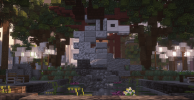
To ensure the prosperity of the land, a guardian was appointed to oversee the grounds. A scaled beast with the body of a serpent and the horns of a deer. It was endowed with the name Nagi, for the ancient water dragon brought about calm currents that parted conflict like a gentle stream. When it rose from the lake, yokai and kami alike were forced to bend to its will. Yet, in possessing such a dominion over the garden, mutiny slowly surged from its quiet corners. Many who had originally respected the swords became discontented with the control the guardian imposed.
Of these defiant beings, one of little power but great cunning emerged. A scarlet oni known by the name Itsuwaru, who could trade his form at will. Consumed by his destructive constitution and greed for power, he sought to vanquish the garden. Yet, all whom he attempted to rally cowered at the idea of challenging the guardian’s authority. Deep malice built within Itsuwaru’s heart, blackening it to the liking of coal. As time ticked onward, the fire of opposition was fueled by the Oni’s rapacity. Yet wit alone could not defeat a guardian, thus, he remained stagnant in his ambition.
While spiritual turmoil consumed the garden, mortal wars plagued the Japanese mainland. Desperation took root in the most noble of men as they searched for a means to overthrow tyranny. Eventually, this anguish reached the foreign shore of the island. A member of a small rebellion, Gidou Tsunemori left deep footprints in the sands as he trekked into a wilderness few had ever laid eyes upon. His presence unnoticed, for his mortal spirit could not be detected. Yet the sight of Gidou’s steady resolve was seen by one creature, Itsuwaru. Attracted by the man’s thirst for retribution, the oni disguised himself as a lesser kami, which would appeal to Gidou’s trust. Itsuwaru approached with confidence and goodwill, inquiring about the man’s exploration. In turn, a war-ridden tale of great sorrow was recounted, encompassing the destruction of the man’s home and the death of his wife. Itsuwaru, fed by Gidou’s desperation, imparted a parable to him, one that would lead him to a power that would rid him of dictatorship.
┏━°⌜ 欺瞞のたとえ話 ⌟°━┓
Walled by garden, swallowed by lake,
the power you seek lies in wait.
One great blade to slay your foes,
rise above all those who oppose.
Severe the long from the short,
draw it before the dragon's retort.
Strike the heart, kill the beast,
the first bite of your retributive feast.
┗━°⌜ 欺瞞のたとえ話 ⌟°━┛
 As the words replayed in Gidou’s head, he descended deeper into the wilderness, finding the botanical paradise framed by a mountain range. He stalked between the shadows, and when he at last drew close to the lake, he saw from the depths the dragon spiral upward. Floods cascaded down between the spines of its back. Instead of eyes, pools of water encircled the sides of its head, casting back the reality of those who looked into them. It only remained at the surface for a moment before slipping into the depths once more.
 Fear swallowed Gidou as the image of the beast captured his mind. It seemed unfathomable that he could cross such guarded waters. The parable spoken by Itsuwaru encircled his ear like a snake flicking its tongue before a strike. Severe the long from the short. His gaze fell to the monument, the longer of the two swords, framed the smaller, taunting him. As long as Nagi remained, Gidou knew he stood no chance of reaching the blade.
He paced in the shade of the garden’s dense forest, searching as night descended. The man stoked a fire to keep warm, the flames dancing in the reflection of his gaze. Reminders of his homeland resurfaced the longer he stared. A reprise of screams and visions of collapsing cities. His wife crying out before she was swallowed by an army a tyrant laughed behind. The fire slowly trailed outward, spreading to the surrounding grass, his eyes flickered with intense fury.
He paced in the shade of the garden’s dense forest, searching as night descended. The man stoked a fire to keep warm, the flames dancing in the reflection of his gaze. Reminders of his homeland resurfaced the longer he stared. A reprise of screams and visions of collapsing cities. His wife crying out before she was swallowed by an army a tyrant laughed behind. The fire slowly trailed outward, spreading to the surrounding grass, his eyes flickered with intense fury.
Gidou rose, walking back to the shore to drag his wasen boat through the vast overgrowth. He planted the boat at the edge of the lake and returned to feed the fire with dead branches. Nothing was spared from its incessant hunger. Soon becoming unbearable to remain beside as it crept into the rest of the garden. It was then that Gidou ran, fueled by the memory of all he had lost. Once he made it to the boat, he turned to see the tower of flames behind him, his gaze held firm in calculated patience. The still lake burst as the dragon spiraled outward, summoned by the screams of all those consumed by the raging blaze. The dragon’s breath materialized as a flood, rushing forward like a swift river, to douse the flames.
Gidou thrust the boat upon the surface of the lake, leaping inside, his coarse hands wrapping the oars as he rowed with all his might. The beast was entirely distracted by the overwhelming inferno as he sailed to the center, where the monument stood. He bounded up the steps with the sheer will of one who had nothing to lose and everything to gain. When at last he made it to the top, his eyes fell to the blades, which mirrored the scene behind him. Flames consumed the entirety of the landscape, and as his fingers brushed the katana’s handle, the dragon turned to face him. Gidou’s eyes widened as it sprang towards him with the strength of a dam bursting. He jolted forward, his hand wrapping it completely. The parable once more repeating, severe the long from the short.
As he drew the katana from its resting place, a great thunderous sound echoed through the heart of the garden. As he turned to face the dragon, the monument below his feet began to crack, threatening to collapse beneath him. He raised the blade in opposition as the world fell around him. When the dragon came upon him, weakened by the removal of the sword, its mouth opened in a final effort to swallow him whole. Strike the heart, kill the beast.
The sword plunged deep into the chest of Nagi as the pillars of the monument crumbled completely. As Gidou stared into the eyes of the beast, he saw his reality reflected back at him. Itsuwaru looming behind, laughing as the facade of his kami form dispersed to reveal his deep red skin. Strings wrapped Gidou’s body, controlled by the wicked ambition of the oni, and the mortal swore for just a moment, he saw his wife crying out beside him.
Gidou thrust the boat upon the surface of the lake, leaping inside, his coarse hands wrapping the oars as he rowed with all his might. The beast was entirely distracted by the overwhelming inferno as he sailed to the center, where the monument stood. He bounded up the steps with the sheer will of one who had nothing to lose and everything to gain. When at last he made it to the top, his eyes fell to the blades, which mirrored the scene behind him. Flames consumed the entirety of the landscape, and as his fingers brushed the katana’s handle, the dragon turned to face him. Gidou’s eyes widened as it sprang towards him with the strength of a dam bursting. He jolted forward, his hand wrapping it completely. The parable once more repeating, severe the long from the short.
As he drew the katana from its resting place, a great thunderous sound echoed through the heart of the garden. As he turned to face the dragon, the monument below his feet began to crack, threatening to collapse beneath him. He raised the blade in opposition as the world fell around him. When the dragon came upon him, weakened by the removal of the sword, its mouth opened in a final effort to swallow him whole. Strike the heart, kill the beast.
The sword plunged deep into the chest of Nagi as the pillars of the monument
crumbled completely. As Gidou stared into the eyes of the beast, he saw his reality reflected back at him. Itsuwaru looming behind, laughing as the facade of his kami form dispersed to reveal his deep red skin. Strings wrapped Gidou’s body, controlled by the wicked ambition of the oni, and the mortal swore for just a moment, he saw his wife crying out beside him.
As the monument collapsed inward, rubble buried Gidou alive, along with the swords. The lake distilled around the ruins before seeping away, drying as the guardian’s soul returned to Takamagahara. All that remained was the fire, which consumed the garden and all those who dwelled within it. Sacred ground destroyed by the wickedness of the impure and the desperation of mankind. Rainfall later leaked from the skies, perhaps the cries of the guardian from the other side. When the fire disappeared, ash was left in the wake of what had once been the garden. This was the end of spiritual balance, never again would the island rest.
As the centuries passed, nature reclaimed the desolate grounds, painting them in living green. Even the crater of the lake was warped with time and later built over by mankind. Only stone depictions of the tale remained as the modern era washed away spiritual stories. Yet before irrelevance killed the memory of the garden, a rumor surfaced following the Jinsei Zen Garden’s construction. Whispers spoke of a parable left behind for yet another desperate mortal. One edged into the very stone of a statue dedicated to the guardian on the west side of the Jinsei grounds.
┏━°⌜ 変化のたとえ話 ⌟°━┓
Swords swore fealty by sacred vow,
buried below where gods did bow.
Hear the heart, that once beat loud,
muffled now by treeroot crowd.
Birth of blossoms overhead,
growing from the beast’s deathbed.
Waiting for the earth to shake with
mortal hands and change to make.
┗━°⌜ 変化のたとえ話 ⌟°━┛
BOOK TWO
HISTORY OF THE JINSEI ZEN GARDEN
History of the Jinsei Zen Garden
. . .
In a modern era that continues to wash away history, one symbol of triumph and prestige remains. Though it appears to the current generation as nothing more than a rarely visited garden, the past reveals a much more pressing tale. One wracked in a persistent desire to maintain ownership over the sacred grounds. Though knowledge of what transpired has wasted away, the archives still remain, laying in wait for those who delight in discovery.
. . .
In a modern era that continues to wash away history, one symbol of triumph and prestige remains. Though it appears to the current generation as nothing more than a rarely visited garden, the past reveals a much more pressing tale. One wracked in a persistent desire to maintain ownership over the sacred grounds. Though knowledge of what transpired has wasted away, the archives still remain, laying in wait for those who delight in discovery.
The Tatsumiya Reign (1230 - 1696)
For the first three centuries of the Jinsei ground’s recognition, it was sparse in historical significance, seen primarily as an extension of the Inner Ochiba Forest. The only factor that set it apart was an established religious affiliation endorsed by the Kisune Monastery in 1230. The affiliation affirmed the sacrality of the land, discouraging deforestation and alteration. The plot had frequent visits from locals who left offerings and worship at the base of a large tree. Though there are few records, it was also said that several festivals were hosted in the 1430s, mostly relating to prevalent figures of the time as well as spirits.
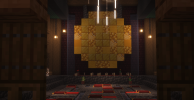 The relatively unremarkable status of the land shifted over a century later, in an event that would mark the beginning of a legacy of prestige. In 1551, the well-established Tatsumiya family rose to prominence on the island. Though they were foreigners from the mainland, they brought with them great opportunities in trade that would fuel the market of Izu-Karakura. As a means to build acclaim with the natives, the family cemented relations with the Kisune monastery and used their wealth to improve the city drastically. As the Tatsumiyas' favor increased, so too did the leniency for their operations. In 1553, the construction of what would be called the Hokuseibu Palace began, placed in the center of the Jinsei grounds. Its cultural and religious qualities were ascribed to the family, strengthening their place amongst residents.
The relatively unremarkable status of the land shifted over a century later, in an event that would mark the beginning of a legacy of prestige. In 1551, the well-established Tatsumiya family rose to prominence on the island. Though they were foreigners from the mainland, they brought with them great opportunities in trade that would fuel the market of Izu-Karakura. As a means to build acclaim with the natives, the family cemented relations with the Kisune monastery and used their wealth to improve the city drastically. As the Tatsumiyas' favor increased, so too did the leniency for their operations. In 1553, the construction of what would be called the Hokuseibu Palace began, placed in the center of the Jinsei grounds. Its cultural and religious qualities were ascribed to the family, strengthening their place amongst residents.
When the palace was finished, news of the achievement brought many merchants from the mainland. Foreign goods were exchanged for the natural riches of the island, allowing local vendors to become more established in the overseas market. Over the course of the next thirty years, many prosperous trade deals took place within the Hokuseibu Palace. One of the most valuable items the family acquired during their reign was a highly appraised giant gong. It was a gift from a Daimyo, who was a frequent associate of their trade efforts. It was said that ringing the gong would summon higher-kami and was considered a symbol of great power. To celebrate the gift, an offering hall was built within the palace to house the instrument.
For nearly 150 years, the Hokuseibu Palace remained in the sole ownership of the Tatsumiya family. Their prominence, however, slowly decreased as other families rose with the island’s development, becoming a shadow beside those later considered Itsbyoshi. During 1695, an unprecedented tragedy swept the palace, cementing the end of the Tatsumiya reign. The head of the family, Yowai Tatsumiya, his wife, and his sons were found dead within one of the drawing rooms they often frequented. The culprit was never found, and speculations began to rise as another prestigious family capitalized on the vacancy of the palace.
Period of the Hokuseibu Court (1696 - 1819)
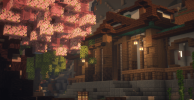 Just four years prior to this period, a governing body had risen to power on the island, a court made up of representatives from thirteen families. Though it is most commonly referred to as the Itsbyoshi Court, for the first thirty years in which it came to power it was also given the name the Hokuseibu Court for its location with the Hokuseibu Palace. Following the Tatsumiya fall, the palace grounds were purchased in 1696 by one of the court families, Masuo, with the purpose of having a base of operations for all dealings of the court. The palace was monumental to the establishment of the party’s authority, allowing the island to be governed in an organized manner. Various affairs took place within its grounds, ranging from court meetings to criminal trials overseen by Kaseya. Audiences with the court became prevalent during this time, as many Karakurans sought improvements to their daily lives.
As law and order rose with the organization of the court, protest soon followed. Between the years of 1698 and 1704 small scale riots paraded outside of the court’s walls. Ranging from mere harassment of court officials, to vandalism of the palace and its surrounding area. Yet in spite of the backlash the court persisted and slowly the criticism quieted as overwhelming support surfaced.
In 1736, the court moved its operations to the Itsbyoshi Palace, which was far larger and able to better encompass the ambitions of the court. Ownership of the Hokuseibu Palace was returned to Masuo, who had originally financed it. Little is known about what occurred under their possession, other than one record filed due to its criminal nature. During 1756, news surfaced of a great fortune stored in a vault within the Hokuseibu grounds. This rumor sparked an attempted robbery of the perceived wealth, though the assailants never found what they were looking for and were ultimately imprisoned.
Westernization and War (1819 - 1943)
The era that followed the Masuo rule was filled with paranoia and destruction. As westernization crept into Japan, threatening tradition, many sought a means to stop its spread. During 1819, possession of the palace was transferred to the Jinn family. It became a refuge for speaking freely, especially during the height of westernization efforts in the 1860s. The loathing that Itsbyoshi families could not openly express in public brewed behind Hokuseibu walls. They swore secrecy regarding several plots to reestablish old traditions, though none ever came to fruition. Eventually, these ambitions crumbled under the weight of modern change, though the palace remained a pillar of the old culture.
 After the resistance of westernization fell through, the palace fell quiet until 1875, when the Kato Family found residence within its walls. This period of ownership would be considered the most tragic within the palace’s history, as war dragged many away from their prosperous lives. For most of the war-ridden years, the grounds remained empty. Ghosts ambled through buildings that once hosted bustling events. As an economic struggle seeped through Karakura, the few Kato family members who remained could no longer afford to upkeep the land. A decision was quickly reached to sell the residence, yet amidst preparation for the sale, the Great Kanto Earthquake of 1924 shook the island and with it the Hokuseibu Palace. It crumbled to the ground, crushing six servants and two family members along with it. The grounds were foreclosed as a public safety hazard, becoming enveloped with rumors of ghosts and urban exploration.
After the resistance of westernization fell through, the palace fell quiet until 1875, when the Kato Family found residence within its walls. This period of ownership would be considered the most tragic within the palace’s history, as war dragged many away from their prosperous lives. For most of the war-ridden years, the grounds remained empty. Ghosts ambled through buildings that once hosted bustling events. As an economic struggle seeped through Karakura, the few Kato family members who remained could no longer afford to upkeep the land. A decision was quickly reached to sell the residence, yet amidst preparation for the sale, the Great Kanto Earthquake of 1924 shook the island and with it the Hokuseibu Palace. It crumbled to the ground, crushing six servants and two family members along with it. The grounds were foreclosed as a public safety hazard, becoming enveloped with rumors of ghosts and urban exploration.
The Age of Silence (1943 - 2021)
When at last the war came to a close, each and every citizen had been touched by loss. The once prestigious grounds, a symbol of wealth and tradition, were left a shell of what they had once been. Its condition resonated with many, and in 1943, a memorial was held within its grounds to honor all those who had sacrificed their lives for the war. It also acted as a place for everyone, regardless of status, to grieve. This event led many to desire the restoration of what had once been the great Hokuseibu Palace. Ownership of the grounds was placed in the Karakuran Government’s hands, and over several decades, renewal took shape.
Headed by Murasaki Kaeda, one of the first governors of Karakura, the former glory of Hokuseibu was slowly restored. It was the first promise the governor had made after assuming his position, and although it took two decades, it began to resemble a portion of what it had once been. Later, when governmental interest fell elsewhere, the grounds were sold to fund other projects. Between the years of 1981 and 2021, the land was privately owned by two families, not as the palace it had once been, but as an estate. Each family contributed to further repair of the grounds, though the public was never privy to such changes. This was a time of silence, in which the land saw few visitors, and the history was sparsely mentioned.
Headed by Murasaki Kaeda, one of the first governors of Karakura, the former glory of Hokuseibu was slowly restored. It was the first promise the governor had made after assuming his position, and although it took two decades, it began to resemble a portion of what it had once been. Later, when governmental interest fell elsewhere, the grounds were sold to fund other projects. Between the years of 1981 and 2021, the land was privately owned by two families, not as the palace it had once been, but as an estate. Each family contributed to further repair of the grounds, though the public was never privy to such changes. This was a time of silence, in which the land saw few visitors, and the history was sparsely mentioned.
Jinsei Zen Garden (2021 - 2025)
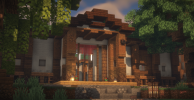 Near the end of 2021, the estate was suddenly abandoned, without notice or sale, and thus the government took ownership of it for a second time. Many of the older citizens who recalled the vast history came forward to express interest in having the grounds opened for public display. A plan for the land to become a garden had been drafted several decades before, but had not gone ahead due to the previous need for funding. Thus, with the help of several historians, construction began to shape the garden to reflect the rich culture that the land represented.
Original artifacts from the Hokuseibu Palace were reinstated, including several statues, and the gong from the Tatsumiya reign. A main building was created to replicate the original worship hall of the palace, as well as a library which archived copies of ancient texts. The west portion of the grounds were dedicated to the religious views regarding the garden’s origin, fit with sculptures of a dragon and various spiritual beings. During its unveiling in 2024, a name was chosen for the grounds, one that would reflect the many lives it had touched over the centuries, the Jinsei Zen Garden. It became a sanctuary to weary children and a reminder to the elderly of what had once been. Most importantly of all, it was a relic, which continued to tell the story of Karakura’s perseverance and strength through the many ages it was expected to fall. As long as it stands, as long as humanity cares to remember the past, it will not die, no matter how many centuries pass.
BOOK THREE
THE HOPE OF A THOUSAND PAPER CRANES
The Hope of a Thousand Paper Cranes
A text regarding the memorial held on the Jinsei grounds in 1943 to honor Karakuran citizens who died during the first and second world war.
. . .
[CLICK IMAGE TO READ]

BOOK FOUR
THE WEEPING MAIDEN
THE WEEPING MAIDEN
A text regarding the statue of the weeping maiden that resides in the east part of the Jinsei Zen Garden.
[CLICK IMAGE TO READ]

A text regarding the statue of the weeping maiden that resides in the east part of the Jinsei Zen Garden.
[CLICK IMAGE TO READ]