

LORE | Comprehensive Art History of Izu Karakura
OOC Mentions
. . .
Created by @.Arkkwolf and inspired by ideas from the lore team as a whole, as well as was proofread by @FuzzyChinchilla and @Oli.
. . .
Created by @.Arkkwolf and inspired by ideas from the lore team as a whole, as well as was proofread by @FuzzyChinchilla and @Oli.
The following is written by historian and restoration artist Tadamichi Kudō
Part I | Education in Karakuran Art History
Foreign and Traditional Styles of the Varying Eras
Author’s Note
. . .
As someone who has committed a vast majority of their life to art history, I find it necessary that I educate the public about our Izu Island’s extensive background in the subject. It should be understood that most depictions, like many aspects of our culture, are based in religion (Buddhism and Shintoism) and nature (the environment and human nature). Throughout history, it has commonly been subject to change with the integration of elements from foreign influence. This integration often involves a new concept or idea being adapted to fit preexisting aesthetics of past art forms. It has allowed for an enriched practice excelling in a diversity of style, subject, color, and form.. . .
The topic is extensive, even with the amount of history that has unfortunately been lost to time. Thus, this document will be broken up into the varying art styles that dominated each period and some of the artists who popularized Karakuran artworks. Much of today’s modern masterpieces take inspiration from those of the past, including my own paintings. Art is an ever-changing form, blending techniques crafted by the ingenuity of the human mind.
Karakuran Art History Timeline
. . .
Cave Art (750s - 1200s) - As is common in many parts of the world, cave art is among the earliest art forms still present in historical sites around the island. Some of the most well-known examples are that of the Shinsei Seinaru Monastery’s Iwaku-Tsuki shrine cave and the Kiyoi Spring Head. The oldest portions of the Iwaku-Tsuki shrine cave date as far back as the 750s, and depict the history of the monastery, as well as Karakura as a whole. The Kiyoi Spring head, similarly, includes a painting of two of Karakura’s local kami, Ten’nen Mizu and Chiharu-Yamatsumi, dated around the early 1200s. Cave art has also been found in areas around the Outer Ochiba and Itsbyoshi Forests.
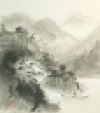 Suibokuga and Sumi-e (1410s - 1500s) - These art styles emerged as a byproduct of the Chinese influence and transmission of Zen philosophy and Buddhism within the 1400s. It was popularized by Buddhist Monks who used it in meditation and mindfulness practices. Within Karakura specifically, a small group of Zen Buddhist Monks often practiced Suibokuga, inking images of the sacred grounds they lived within (what is now the Jinsei Zen Garden). This practice was popularized by Monk Inochi Fukunaga in the year 1455, when he gifted members of the Shizukanamichi Court three Ink Wash Landscapes depicting Karakura’s Kohaku mountainscape and shoin-zukuri.
Kano School Art (1480s - 1730s) - Kano school art, much like Suibokuga, adheres to elements from Chinese art styles. However, rather than having fluid, smooth strokes, Kano school art favored a bold, hard edge. Some of the most popular Karakuran paintings within this style depict varying noble-house kamon, influential figureheads of the time, as well as the ancient water dragon that was believed to reside over the Garden of Duality.
Rimpa School Art (1630s - 1700s) - Unlike Kano School, which was typically a style mastered and passed down through generations of blood relatives, Rimpa School was a more independent movement. Rather than a primarily screen canvas, it could take the form of ceramics, kimonos, handfans and more. This was especially common within Karakura due to its radical adoption by members of the artisan coalition known as the Kōmeina-Kurieitā coalition. This style would later inspire the works of handfan artist Shigeyo Banshouya.

Nanban (1540s-1590s) - Nanban art appeared within the Izu Islands due to the appearance of Portuguese missionaries and traders. It took the form of traditional techniques that focused on Western subjects. The most influential Nanban artist within Izu Karakura was that of João Carvalho, an older Portuguese artist who immigrated following the death of his wife. He learned traditional forms from local artists, and often created melancholic works inspired by his memories of Portugal.
Baroque and Flemish Baroque (1660s - 1780s) - While not typically common within Japan, this European style was introduced to the Izu Islands by portrait artist Tsukuru Saigusa. It focused on dynamic, dramatic elements in lighting, movement, and realism. Tsukuru was a local-born man within Karakura who mastered many different traditional and foreign styles through extensive education funded by his aristocratic bloodline. This foreign style was extremely successful in bolstering his reputation and bringing a new and westernized aspect to Karakura art.
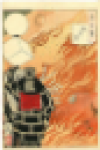 Ukiyo-e (1609s - 1820s) - Often called the “floating world,” Ukiyo-e transformed Japanese art through the use of full color woodblock printing and the adoption of westernized styles of linear perspective and unusual viewpoints. Early renditions of Karakuran Ukiyo-e took the form of hand-painted illustrations of Kabuki theater subjects, created by the common class out of a need to capture the average man’s struggle. One subject that was especially prominent was depictions of the violent group of kabukimono. Often, they were illustrated as surrounded by fire and yokai who seemed to control their actions. Later renditions of Karakuran Ukiyo-e involved woodblock prints. They were commonly produced by the Kōmeina-Kurieitā coalition due to the need for multiple artisans such as a wood carver, printer, and publisher to produce each work.
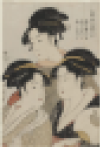 Bijin-ga (1920s) - Rooted in Ukiyo-e traditions, Bijin-ga diverged through its focus on people, primarily women, geisha, and fashion. It often reinforced idealistic beauty standards using smooth lines and expressive posing. Takumi Koumyou, a pupil of Bigin’ga master artist Kaburagi Kiyokata, lived within Karakura City for three years (1922-1925) at the height of his master’s career. He was in search of diversity in subject and culture among the Izu Islands. He and Kiyokata often exchanged letters of the subjects that Koumyou painted, including several Karakuran Geisha, Kabuki actors, noblewomen, and tea house waitresses.
 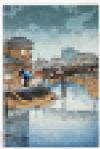 Karakuran Fauvism (1880s - 1930s) - This form was inspired by Japanese Fauvism artist Tetsugoro Yorozu. Traditional elements of Fauvism include French techniques of vibrant color, strong brushwork, and personal expression. Karakura Fauvism differs in subject, showcasing the experiences of living in the port town of Tsubasa, reflecting deeply dreary and monotone gray and blue color palettes. It was originally created in 1889 by a young female artist named Seiya Arashi, whose parents were fishermen and often out at sea for months at a time. Through feelings of loneliness and isolation, the artistic style of Karakuran Fauvism was born to express the inner feelings of Seiya. It gained traction among the locals who deeply resonated with the struggles associated with the fishing and port industry.
Shin-Hanga (1915 - 1942) - A style involving Western elements of expression and light impression, and traditional ukiyo-e hand-drawn brushstrokes. Prints in the Shin-Hanga form were extremely popular overseas for how they romanticized Japanese culture. Karakura local Ma Reiyama used this style to capture the sentiments of the war during the period. One of her most famous pieces depicts the dual reality of a blossoming cherry blossom beside the bomb rubble at the centre of Karakura City. Ma often included a homage within each piece that was representative of her brother, one of the many casualties sent off to war who never returned.
Superflat (1990s - 2000s) - Heavily inspired by the consumer culture of manga and anime, this style is quite popular overseas and within Japan. It focused on bright colors and bold lining that reveal how the entertainment industry has saturated tradition and culture. This style is prominent within Karakuran youth, and these designs are often found in stickers, graffiti tags and billboards around the city.
Part II - On The Art of Painting Flaws
Lessons of Portrait Artist Tsykuru Saigusa
Rolling over the eaves, the midday showers turn curtain, warping the scenery behind. This antiquated home, sunk in by rain damage, is a testament, though few pay it mind. In old age, I find myself particularly captivated by simple pleasures of the eye. Sublimity comes in forms my youth hadn’t the experience to fathom decades ago. There is a satisfaction to living a humble lifestyle, one without fame. There are many riches beyond the monetary. In the breath of morning dew and the musk of dirt, foundations are built. Dear reader, fortune and reputation sour the wealth in ordinary living.
When I stare at her portraits, countless renditions of which I have restored, I often wonder, in earnest, if the great regent of Izu Karakura felt elation from more than mere titles. Further, I question the artist of the painting, his intentions when interpreting the subject. Upon gazing into the eyes of Tsugumi Takagi, did he see a vain ruler, hollowed by achievement, or a woman of many grave flaws? History recounts her and many others as influential persons for their contributions to this Izu Island. But in all their grandeur, they are still very much human.
There is a chronicle that occupies my mind often these days, one I feel necessary to impart; otherwise it shall join me in the grave. I was made aware of it the day I was commissioned to restore the Tsugumi Takagi portrait within the Shinsei Seinaru Monastery’s possession. The frame was worn, with a loose fabric backing, and the canvas, much like my home, had become the product of horrid water damage. I pried the fabric loose, deconstructing it in my living room, when a piece of washi paper slipped out from behind the frame. The contents of such, I shall, to the best of my ability summarize as though I were an objective narrator. Though I imagine empathy may sway my interpretation, as a painter myself.
During the age of the great Hokuseibu court, there persisted an esteemed gathering of artisans. They were entitled the Kōmeina-Kurieitā Coalition, masters of their varying crafts who prided themselves on their status. To be among them was considered the highest honour, only those of noble origin could hope to afford their wares. They were widely known beyond the Izu Islands, often commissioned by the emperor and his court for high-quality goods. Many items of historical relevance were created by the artisans. The coalition provided a home for those of jewelers, painters, mask makers, potters, metal workers, and beyond. It was indeed a fine time to hone one’s ability in hopes of one day having it displayed in a palace, Karakuran or otherwise.
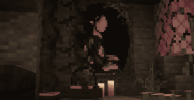 Yet, in spite of their unified title, the members of the coalition felt a great threat from one another’s success. Even across completely unrelated arts, glory and status remained in fickle supply. None better demonstrated this reality than the ascension of painter Tsukuru Saigusa. Tsukuru was a young man of great ambition, not for monetary or social praise, but out of a deep devotion to his craft. Such passion shined through in the deft methods he employed when addressing a canvas.
 Though he painted many subjects, the one that earned him the most acclaim was the portraits of highly regarded aristocrats who wished to cement their image for decades to come. Tsukuru’s painter style was unlike many of the time; though he was classically trained in traditional Ukiyo-e and Nanban, he also adopted a Western style known as Baroque, an approach involving rich color, theatrical emotion, and dramatic lighting. He was, at heart, one who consistently challenged his own ability, believing improvement was a lifelong pursuit.
While the splendor of his advanced position was of little care to Tsukuru, his growing popularity felt like a threat to the spotlight the coalition had held for so many years. This concern became ever more pressing after he painted a portrait of the Exalted Lady Tsugumi Takagi. The piece was so expressive and profoundly received that he was commissioned to create several copies of the painting over the next few years. High society spoke for weeks about the item and how it evoked unbelievable emotion from those who gazed upon it. A combination of old and new techniques coming together to birth something entirely foreign.
While most of Kōmeina-Kurieitā silently mulled over the clamor, some were not so willing to overlook one of their fellow artisans eclipsing the esteem of the coalition. Especially that of the circle’s headship, the Banshouyas. The Banshouyas were a married pair; the husband, Shidou Banshouya, was an esteemed jeweller, while the wife, Shigeyo Banshouya practiced the most delicate art of hand fan painting. They watched Tsukuru rise to glory, becoming beloved by the Hokuseibu court and the Takagi household. In light of such an acquisition, the Banshouyas began to plot to undo the reputation the painter had garnered. Shidou crafted a devilish plan that his wife would put into action. Jealousy seeped into every crook of their decisions, each calculated to ensure success would find them in the downfall of their associate.
Their strategy was put into motion during the days in which Tsukuru was commissioned to paint a portrait of Misaki Masuo, an attendant of Lady Takagi. She had become enamoured by the prior painting of her Lady and wished for one of her own, after being recommended to do so by none other than Shigeyo Banshouya. Shigeyo and Misaki were often in one another’s company, as the attendant had an extensive and expensive taste for hand fans.
During the course of the commission, Tsukuru had access to the inner walls of her home, setting up his canvas and supplies in the gardens. Of his clients, he often requested to inspect portions of their home in order to get a sense of the person he was to bring to life on a canvas. He believed wholeheartedly that people were what they chose to surround themselves with. In doing so, it left him vulnerable to the horrid schemes of his coalition heads.
As was common for many ladies of high birth, Misaki Masuo possessed many items endowed with the crest of her Masuo household. This included an heirloom passed down through the family’s generations of women, a hair comb carved of intricate design and rich material. Shigeyo, familiar with the attendant’s habits, procured the comb and planted it in a porcelain and jade pigment jar that Tsukuru had left out in the garden. The comb was pressed into the bottom, concealed by vermilion powder.
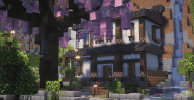 There it remained for several weeks as Tsukuru worked on the portrait, Misaki a living statue as she posed within a fine white gazebo. Near the end of their time together, Shigeko joined the pair in the garden, keeping the attendant company, as one might with a good friend. She leaned against the stand holding up the pigment jars, and beared just enough weight so that it would collapse. Naples yellow, smalt, verdigris, orpiment, and vermilion spilt onto the grass below, the rich colors spreading out as the breeze carried them in a southwestern direction.
Shigeko scrambled to collect the various brushes and jars that had toppled over, reaffirming apologies for her carelessness. Her hand brushed along the vermilion, her face feigning surprise when she pulled the Masuo comb from the pigments. The woman’s fingertips brushed along the crest, all within the close eye of Misaki. Shigeko rose towards Tsukuru, the accusation lacing her tone evident as she cried out. Her words were something along the lines of how cruel and unthinkable it was to steal from a humble servant of the Exalted Lady.
Over the next few days, word quickly spread about the thievery. Others, who had commissioned Tsukuru, began to wonder if the various items that they had also lost track of had also been taken by him. They had put their undivided trust in the painter, allowing him access to private places under the assumption it would allow the accuracy of their portraits to be accentuated.
The Banshouyas witnessed their scheme escalate in a way neither of them had intended. Blame fell easily as Tsukuru became a scapegoat for the misplaced valuables and riches of those within Izu Karakura. Eventually, this outrage reached the steps of the Hokuseibu court, who felt pressure to quell the outrage of high society. Though none of the items lost by other nobility was recovered, prosecution came down mercilessly on Tsukuru Saigusa.
Rather than letting the gossip spiral and eventually fizzle out, the Banshouyas used their authority as the heads of the Kōmeina-Kurieitā coalition to publicly denounce Tsukuru as a thief who used his status to take advantage of the clientele. Shidou campaigned for justice for such crimes, exclaiming that his wife was the one to uncover his multifaceted theft endeavor. In turn, their reputation as honest and impartial persons gained them high favor.
To appease the simmering distrust, the Hokuseibu court delivered a sentence of exile to Tsukuru Saigusa. He would spend the rest of his days on the Izu island of Hachijō-jima. Exile was perhaps a kinder sentence than dismissing the public’s accusations and forcing them to take it into their own hands. At least in the solace of isolation he could find some kind of peace, lest he live in a society that, for nothing other than rumors, had outcast him entirely.
That is where the washi paper recollection leaves off, abrupt with no detail as to what followed. There is no explicit mention of Tsukuru Saigusa in the history books. As I have come to understand it, his name was overshadowed by the Banshouyas. This chronicle was written by Tsukuru, a last resort for the tale to be heard, likely knowing what would follow after his exile. The Banshouyas would go on to create many historically significant items, such as the esteemed hairpins and handfans commissioned by the regent in her last years of ruling.
In my retirement, I have taken it upon myself to carry on his legacy, knowing the truth of what occurred. Restoring not only portraits of the distant past, but also creating works of today's famed persons. Tsukuru Saigusa reminds me daily of the importance of loving the arts not for what fame it might bring me, but for the richness that comes in merely indulging and honing one’s craft.
 Although Tsukuru’s downfall could be attributed to what one might call intrusive methods, I often find myself employing them. For if nothing else, he was right about one aspect in particular: people, in both a literal and metaphorical sense, are what they choose to surround themselves with. When I stare into the eyes of those I have the privilege of painting, I see them not for their achievements, however great they may be. But rather, I choose to innately capture their flaws. In doing so, I find satisfaction, knowing the person beyond the rumors and titles.
I’ve never been good at wrapping up a project. In my experience, one is never truly done with a painting. There is always more that can be added, and if one finds themselves unsatisfied, they can begin anew simply by adding a layer of white. Similarly, I do not feel what I have said is complete. And yet this cannot drag on much longer. Thus, dear reader, I shall leave you with one parting statement, as a reminder for your future endeavors. We are given only one life to experience the richness of this world, and most conquest for their entire time here, without realizing one simple truth: that they were already living in it.