


OOC MENTIONS
. . .
The following was written by @.Arkkwolf and proofread by @FuzzyChinchilla and @RexLobo. It may be taken ICLY if inquired through IC means (inquiry by Shinsei Seinaru Monastery Workers). All photos taken by myself and @RandomlyAccepted, they may not be taken ICLY.
. . .
The following was written by @.Arkkwolf and proofread by @FuzzyChinchilla and @RexLobo. It may be taken ICLY if inquired through IC means (inquiry by Shinsei Seinaru Monastery Workers). All photos taken by myself and @RandomlyAccepted, they may not be taken ICLY.
Authorial Foreword
Biblioclasm, the destruction of knowledge for the sake of silencing opposition and erasing culture. It is a phenomenon that is repeatedly seen in all corners of the world, regardless of the era. History is only as factual as what survives the torches. For a long period of time, the Karakura Monastery was a stronghold for knowledge. It documented and protected the tradition and culture from its only obstacle, time. Yet, political adversaries know best what keeps the populace’s trust. Religion drives even the great emperors to their knees.
As history has it documented, Karakura’s monastery crumbled in two major fires. The first during 1176 under the name the Akatera Monastery, and the second in 1593 under the name the Kisune monastery. Both of which were results of political rebellion by the masses. In truth, the losses of these occurrences are unaccounted for. However, bits and pieces recovered by historians hope to knit together the narrative lost to time. This collection of letters and documentation details the history of artifacts and monasterial on-goings previously unknown. For the sake of avoiding misconstrued information, understand that the same monastery has been burned and rebuilt. Each time, it has received a new name, representative of rebirth. The following documentation is grouped according to approximate date, and were discovered during different reconstruction eras.
Age of the Akatera Monastery
The following is documentation salvaged during the reconstruction and birth of the Kisune Monastery in 1228. It includes artifacts and knowledge from the Akatera Monastery and Saisho-Setchi Temple spanning from 744 - 1228.
The following are several excerpts written by Monk-Scribe Myōun Sugawara, retrieved from the old shrine.
Word of the mainland has finally reached our sect, Kiyomori Taira refuses to adhere to tradition. The Blessed One would advise we weigh personal experience and be open. In doing so, I find that the abdication of attachment is contingent upon the continuation of the Daijō Hōō. If we allow our rulers to set aside vows and cling to wealth and the things of this world, what example will be given to their people? For what reason have they to follow such ways, when their leader dines and feasts as pigs do? An agreement has been struck, Akatera will not let such a matter pass unchallenged. Nor shall the monasteries of the mainland sit idly by as we stray further and further from reaching nirvana.
Monk-Scribe Myōun Sugawara.
Dated 1162
They would have our voices silenced, our tongues cut out for opposing a vain ruler. The Taira family has begun to take public notice of our monasterial authority with the people. I long suspected they privately acknowledged our efforts to gain their attention, yet believed we would grow tiresome and the matter would be extinguished over time. We serve the people and their best interests, a duty the emperor ensured with Buddhist vows prior to Kiyomori’s invasion. I’ve heard startling rumors from the Kamigyō-ku sect. Whispers of an institution of some form, to revoke our authority over the masses. I fear that drastic measures may be implemented to silence our rebellion.
Monk-Scribe Myōun Sugawara.
Dated 1671
The following, written by Monk-Scribe Myōun Sugawara, was retrieved from the Jinsei Zen Garden in 1496, for the monastery’s collection.
Akatera is no more. Kiyomori’s sympathizers have burned it into the earth. They came in the night, and many lives were lost. Some of my brothers have fled with me to the sacred grounds within the inner woods. The rest have shirked their vows in fear, forced to accept the emperor and his court’s institution of Shintoism. Our Jūshoku, Baika Minamoto, was executed. Our triad with the mainland monasteries and our peaceful protests kindred too great of a support by the people. They wished to make an example of Baika, for if Karakura, the least accessible monastery, could be dominated, so could the others.
Conversion seems imminent across Japan. Though the prospect is deeply troubling, impermanence is what the Blessed One so often emphasized. We will rebuild, as though we are rivers carved from floods. Though our influence has dwindled significantly, the truth of enlightenment can never be dimmed.
Monk-Scribe Myōun Sugawara.
Dated 1180
The following is a partial page of a much larger document that was burned, written by Kannushi Syousen Okayama.
 . . . and as for the scandal of Akatera, let it finally be laid to rest. I recall well the riot of the people and their hesitancy to accept change had come to the shores of Izu Karakura. Their trust was not easily won. I thank the great families who championed the transition. I find great honor in my role as an advocate of the kami. The monastery shall finally worship the gods who dwell here. From those of Takamagahara to the very grounds we walk, let all be recognized. Prosperity of the now Kisune Monastery is contingent upon the fueling of the gods.
The last few decades have left many unsatisfied. Fear has gripped these lands with the fall of their beloved Buddhist traditions. Clearly, it was the will of the gods for Akatera to meet such a fate. They have become angered by the lack of recognition by Karakurans. What ignorance, to worship a so-called manifestation of their buddha, while their feet carelessly treaded upon the cavernous heart of Kami Ōyamatsumi’s daughter. No more, may the lack of tribute be forgiven to usher in a great era of Shintoism.
Kannushi Syousen Okayama
Dated 1228
Age of the Kisune Monastery
The following is documentation salvaged during the reconstruction and birth of the Shinsei-Seinaru Monastery in 1593. It includes artifacts and knowledge from the Kisune monastery, spanning from 1228 - 1593.
A document speaking on the kami that were worshiped during the Kisune era of the monastery, before the eventual burning. There is no exact date or author mentioned.
When ruin took hold of the Garden of Duality, most of the minor kami bound themselves completely to
 their natural forms. The Kisune Monastery has taken on the great task of honoring as many as we can. We pay special tribute to Ōyamatsumi and his children for they are the great Kohaku Mountain Range. As such, Ōyamatsumi has been immortalized in stone near the entrance to his daughter’s heart.
Worship has also been bestowed upon Ten'nen-mizu, the spring that runs through the mountain. He is of a lesser power, yet he provides us clean drinking water and a basin to wash away impurities. As for the celestial kami, they have special shrines above the heiden. Amaterasu and Tsukuyomi appear beside them as day transitions to night. As of late our Kannushi has also held vigil in the inner Ochiba woods for Kukunochi. The trees shake with our offerings of sakaki. There are far too many to note, each contributing to the natural cycle. I pray our devotion is felt so that we may avoid displeasing them. Karakura can not withstand the wrath of the gods, famine and storms would desecrate us all.
A document regarding the construction of the heart of the kami, written by Miko Kiyofumi Haruda in 1412.
The heart of the kami has finally been completed, at last we can access the closest space to Chiharu-Yamatsumi. It was an unrefined passageway within the old shrine , that not even the monks of Saisho-Setchi ventured into. However, rather than celebration, mourning has overcome the monastery as of late. I am writing as a substitute for Guji Iwasaki, who unfortunately lost his life last week when the cavern of the heart collapsed. He had brought in a family member to show them the progress. I cannot help but feel even as shrine workers, our presence was never meant to coexist with such a sacred space. A rule has been enacted, no common folk, even that of family, shall descend the steps, to prevent impurity and the displeasure of Chiharu-Yamatsumi.
There are several brief mentions within damaged documentation of a great library hidden somewhere within the monastery grounds. It is believed that during the burning of the Kisune Monastery, it was completely destroyed. Karakuran history and traditions were completely lost to the fire. The following are several mentions of said library and some of its contents.
Kisune Monastery Written Report
Signed off by Shinkan Yomito Dokusha, dated 1310.
The Taeshinobu Library has finished its inventory for the year. At present a total of four-hundred and twelve texts, scrolls, and kojiki have been donated by prominent families and mainland allies. Throughout the year, scholars from all over Japan have visited, in hopes of being granted access to the archives. It was a successful year for the monastery overall, and our head scribe has nearly finished documentation of the Karakuran ongoing from the past few decades. May Tenjin be honored by our pursuit towards knowledge and may our offerings to his shrine provide fruitful endeavors this following year.
Newly Established Karakuran Traditions and Cultural Practices
Signed off by Shinkan Yomito Dokusha, dated 1327.
- Cleansing and vigil of the Yomotsu Hirasaka, to occur during October at the blood gate.
- Obon Festival honoring Karakuran ancestors and historical figures.
- Ritual offering to Ten'nen-mizu within the hotsprings.
- Ikebana festival, covering the whole of Karakura in floral arrangements.
- The Sado Ceremony involving Karakuran nobles serving tea to the masses.
- Karakuran summer market where foreign goods are exchanged and trading ties are strengthened.
- A Suiseki celebration held twice a year.
Yomotsu Hirasaka Report
Signed off by Shinkan Yomito Dokusha, dated 1335
It is the eve of the Yomotsu Hirasaka Vigil. As is custom, the gate has been cleansed and sealed with the lining of shimenawa and stone tablets carved with inscriptions of purity and protection. As Izanagi sealed the first Yomotsu Hirasaka with a boulder, we must also seal the blood gate. It is dire that this custom should never be discontinued, elsewise one may struggle to tell whom among them is a yokai and whom among them is a human being. Worlds will bleed and great calamity will follow Izu Karakura.
A document regarding Imperial Regent Hideyoshi, dated 1590. It has no written author.
The militant and absolutist methods of Hideyoshi have caused a great stir within Karakura. Most have claimed neutrality on the matter, Kisune has openly declared such and refuses to take a stance. Several of our monastery workers prior to this, blessed the weaponry of fleeing samurai. Our ranks had been divided for some time, though our public claim of neutrality emerged unanimously. We are a stronghold of knowledge and faith, not a vessel for civil war.
A document regarding the burning of the Kisune monastery, dated 1593. It has no written author.
The insurrection has turned Kisune to ash under the relentless hand of Hideyoshi. First, they burned the Saiky and Nashima castles. The long standing neutrality has meant nothing. In response, Karakurans rallied in opposition, yet nothing is sacred to that dictator. They ravaged our grounds, looting the offering for the gods, forcing us to watch as everything but the old shrine succumbed. Several people died in the fire, including Eguchi, may he ascend to the high heavens.
The Nashima, Saiky, and Moritachi clans have vowed to give us a place of residence in the meantime. The monastery will not soon forget their sacrifice. It will take many years to rebuild and the spirits in loss of their home leave the natural state of things unbalanced. We’ve attempted time and time again to pray to the kami for guidance, but none have answered. Karihuema’s tree remains intact, even now it persists as a symbol of resilience against impurity and the unnatural and impulsive choices of humanity.
Age of the Shinsei Seinaru Monastery
The following is documentation during the Shinsei Seinaru monastery from 1593-1868. It includes artifacts and knowledge dated after the burning of the Kisune monastery.
A short entry about the Jichinsai ritual hosted in 1596 to begin reconstruction of the monastery, it has no written author.
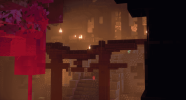
We engaged in the proper rites to begin reconstruction of the shrine by way of the Jichinsai ritual. It was already assumed the lesser spirits were displeased with the desecration of their home. What we did not expect was for the destruction to entirely silence the gods. It is as if they’ve left the grounds entirely, in favor of other monasteries who also worship them. The only spirits of notable worth who remain are Chiharu-Yamatsumi, Ten'nen-mizu, and the Kodama. They are local, they have no other shrines to retreat to. Chiharu-Yamatsumi has left our offerings untouched and Ten'nen-mizu’s spring is in an unprecedented drought. An era of godlessness has overcome Izu Karakura and morale has never been lower.
Several pages of the diary of Miko Ritsu Osogami, dated 1620 - 1622. It was retrieved from the tea house, following the renovation order by Mitsue-Shiro Randamu Heddo in 2024.
Yesterday Hatsuichi failed to return from his nightly visit of the Kodama. For one of our own to go missing is quite distressing. He has always been attentive and steadfast. In fact, I was of the opinion that when Kobayashi retired, he would be promoted to the rank of Guji. His reputation will hopefully allow for his whereabouts to be quickly discovered, on Chiharu’s wishes. We’ve already formed a search party, we will not rest until he is found.
It has been a week and a half, and still no word has been given regarding the venue of Hatsuichi. There’s this unsettled fury in my chest. I have never felt so restless in all my days working here. We’ve attempted to go on as usual, but often I find myself staring down at the woods. I ventured down once two days ago. I prayed to the Kodama for his safe return at mid-day. My offers of salt and rice were left of her trunk. Hatsuichi is the best among us, he must return.
It has only been six months, and five of our staff, and countless civilians have disappeared without explanation. I, like everyone else, have begun to worry that I’ll soon join them. Naishoten Sakurai reassures me, in light-hearted jokes, that my red hair would confuse a yokai long enough for me to escape. I don’t find it entirely funny, especially with the losses we’ve already accumulated.
Sometimes I wonder if this is some sort of punishment from the gods. However, I cannot understand why we would be the victims of their ire. Did we not offer them enough? Did the citizens not pray in the correct capacity? How many more will go missing before they are satisfied?
A partially illegible scribbling retrieved from a table in the Iwaku-Tsuki cave. It isn’t dated, but the quality suggests it's from multiple centuries later.
They’re back. I know it. The I#hi#a#a are the blood of those yokai possessed cultists. I must #### them before they ###### the ambitions of their predecessors. The war was merely a distraction from the real threat, K##s#-#a##ei. I will not let yet another ##### worker fall #### to the jaws of these dogs. On my Mi###ak# lineage and as the K#n##sh#, I will avenge those who #### ####.
A collection of documents regarding the Urn of Secrets, dated between the years 1612-1622, written by Chihiro Fukuda.
This is the first of what I hope to be many entries regarding what we’ve decided to call Himitsu no Tamishi, the urn of secrets. Discovery came when a cave was unearthed by the tearing down of a desecrated farm house. The urn was tucked behind a wall near the entrance, framed by paintings and engravings. These paintings, in their remarkable craftsmanship, tell of those who came before us and the history of our monastery.
If any documentation existed of the urn, it had since been destroyed. Thus, we sought to consult the Hokuseibu Court on the matter. The artisan who crafted it and its ultimate purpose remain unknown still. The court distrusts it entirely and has forbidden interaction with it or entry into the cave. For now mere speculation on its origins is the only path forward. As for the cave, I’ve taken it upon myself to call it the Iwaku-Tsuki cave, for its history with hidden circumstances.
Chihiro Fukuda
Dated 1612
The court has finally unsealed the Iwaku-Tsuki cave. I’ve heard rumors
 of the urn whispering to court officials while it was under their care. Mostly of how angry and volatile the unintelligible words seemed to be. It has since been returned to the shrine and we’ve been sworn to secrecy on the matter. I don’t know why it speaks and what it speaks of, yet I cannot help but consider the possibility of what lies inside the brass shell.
The urn was not the only artifact found in Iwaku-Tsuki. High on a ledge, a wooden tengu mask of considerable age had been preserved. I’ve found only rumors in our sparse records, though I am of the opinion it is from the days of Karihuema. Perhaps it was a representation of the yokai fought during that grave battle. Or perhaps, it is the face of a yokai, preserved in petrified wood. Other than a few ancient buddha statues likely from Akatera, nothing else of interest was inside. The court has left something of their own however, a shrine dedicated to the Tenoshison Family. Nepotism at its best, though I am most grateful we have been returned possession of the urn.
Chihiro Fukuda
Dated 1618
It whispered to me. My coworkers don’t believe me. Paranoia they claim drives men mad. I am perfectly sane and I will prove it! It speaks in tongues and riddles of a foreign language. A bestial quality that I dare say is impure. It holds hostage devils, and as the seasonal turning is nye the screams grow louder. I wonder how long they’ve been sealed. These are not the kind that pass through the Yomotsu Hirasaka. Those always return to Yomi after the vigil is held. These are angry and spiteful, and should they escape the urn, reckoning shall be an understatement for their retaliation.
Chihiro Fukuda
Dated 1622
A written acknowledgement of the contributors of the Shinsei Seinaru reconstruction published in 1617.
With the finished construction and birth of the Shinsei Seinaru Monastery, let
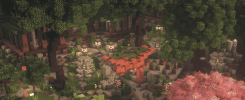 us acknowledge the many who contributed to this glorious rise. Firstly we extend our deepest thanks to the citizens of Karakura, who provided support in the form of morale and small tokens of favor. We have always sought to serve the people, and truly they’ve repaid the favor with their support.
Secondly, to the Moritachi and Nashima clans, we honor your labor and funding to restore this historic and sacred landmark. May the kami honor you for your efforts and may your ancestors beam with pride at your servitude.
Finally, we recognize the effort of the Saiky houses in their continual pursuit and support during a time in which their own home had been destroyed. We hold high regard for Kazuya Saiky, whose contributions are no short of god-imbued. There is no doubt that without his leadership the monastery would not stand as it is today. Following the court deviation of sectors, the Shinsei Seinaru Monastery would like to express their deepest joys that Saiky has been given guardianship of the newly established grounds. May our relations be fruitful for generations to come, and should the monastery be cast into the flames, let us join together once more to be reborn from the ashes.
A letter addressed to monasteries across Japan from the Mainland royal court, dated 1868. It has a broken seal from the Meiji imperial family.
Sanjō Sanetomi, prime minister of Japan and other officials of the Imperial Court in address to all Shintoist monasteries of the Japanese territories, both former and prior greet:
All heads of the Yashiro: Whereas following the accession of our great arahitogami, Emperor Meiji, it is of imperial asking that the legitimacy of his majesty as a divine descent of Amaterasu-Ōmikami be recognized by the sacred establishments addressed in the former heading. The elevation of the royal family has long been informally understood as that of a heavenly sovereign.
As westernization seeps into the very fibers of our tradition, it is of the utmost imperaty that we unify under the throne our ancestors reigned from time immemorial. Let it be known by the masses who denote the name Emperor Meiji that he is of blessed blood, risen to combat the foreign influence seeking to silence our gods and way of living. Should any contest the validity of these long unspoken truths, they shall not only answer the Emperor's plight but also his esteemed ancestor Amaterasu-Ōmikami, the sungoddess of the high heavens.
Signed Sanjō Sanetomi, Prime Minister of Japan
A response to the imperial court’s letter, written by Mitsue-shiro Inoa Shoubusako, dated 1868.
Mitsue-Shiro Inoa Shoubusako in reply to the inquiry of Emperor Meiji’s legitimacy as a arahitogami, greets:
The imperial court: whereas it is our humblest reminder that Izu Karakura is its own nation, separate from that of mainland Japan. The Shinsei Seinaru Monastery will not legitimize such claims of Emperor Meiji being a descendant of the celestial sun goddess Amaterasu. Such statements are blasphemous and clearly an attempt to undermine the authority of our own Itsbyoshi Court in its time of prominent impact.
We will not bend the knee or recognize a mortal man as a god. The Shinsei Seinaru Monastery breaks tradition with my own accession, the first of feminine leadership, as Mitsue-Shiro. This shrine is no stranger to the resistance of political tact and propaganda that benefit the imperial elites. The populus will unite under Amatersu and the other Amatsukami without need for the acquisition of an emperor as a heavenly sovereign. Let your affairs no longer come in the form of matters that do not concern our separate way of living.
Signed Mitsue-Shiro Inoa Shoubusako of the Shinsei Seinaru Monastery